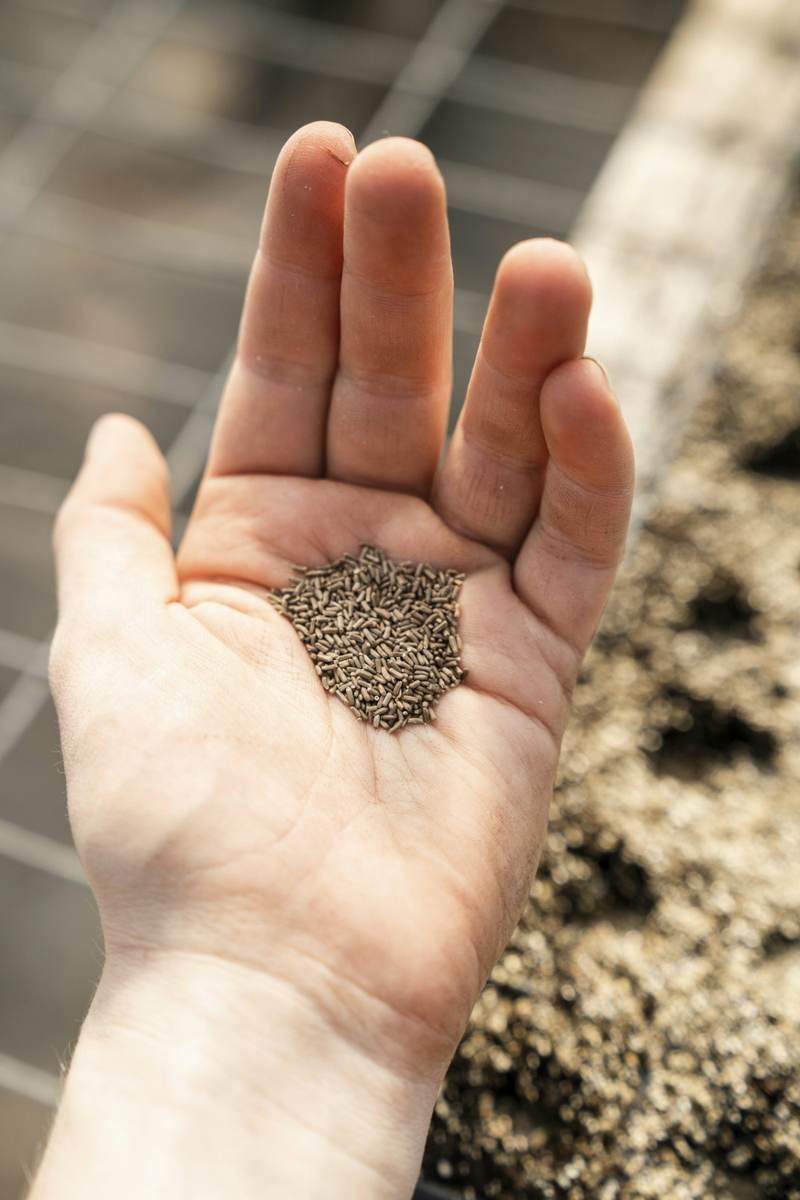
Pick up a pinch of dust. Almost every atom in it, apart from hydrogen and a little helium, was made inside a star. So were the atoms in your hand. The oxygen you are breathing, the carbon in your muscles, the calcium in your teeth: all were forged in stellar furnaces, scattered across space when those stars died, and gathered up again into a new star, our Sun, and its planets.
It sounds like poetry, but it is one of the best-tested results in astronomy. And it turns an old line on its head. 'Dust you are, and to dust you shall return' turns out to be truer than anyone knew, and the dust is older than the Earth.
“And among His signs is that He created you from dust; then, behold, you are human beings spreading out across the earth.”
Qur'an 30:20 · our rendering
Surah ar-Rum lists a series of 'signs' in a row: our creation from dust, the love and mercy between spouses, the variety of languages and colours, sleep, lightning and rain. The point is the contrast: from something as humble as dust, God brings people who think, travel, love and build. It is a call to humility and gratitude.
What science shows
The Big Bang made the lightest elements: about three quarters hydrogen and one quarter helium by mass, with a trace of lithium. Everything else had to be made later. Since the 1920s, when Cecilia Payne showed that stars are made mostly of hydrogen and helium, astronomers have known stars are fusion reactors. The Sun fuses about 600 million tonnes of hydrogen into helium every second.
In 1957 four scientists, Margaret and Geoffrey Burbidge, William Fowler and Fred Hoyle, published a famous 104-page paper, often called B2FH, explaining how stars build the heavier elements step by step. Helium nuclei fuse into carbon, carbon into oxygen, and so on through neon, magnesium and silicon. Big stars can fuse all the way to iron, but no further: making anything heavier than iron costs energy rather than releasing it.
So where do the heavier elements come from? Some are made slowly, inside ageing giant stars, by soaking up neutrons. Others are made in a flash during violent events. On 17 August 2017 the LIGO and Virgo detectors felt gravitational waves from two neutron stars colliding 130 million light years away, and telescopes saw the explosion, a 'kilonova', glowing with freshly made heavy elements. Collisions like that are thought to make much of the universe's gold and platinum.
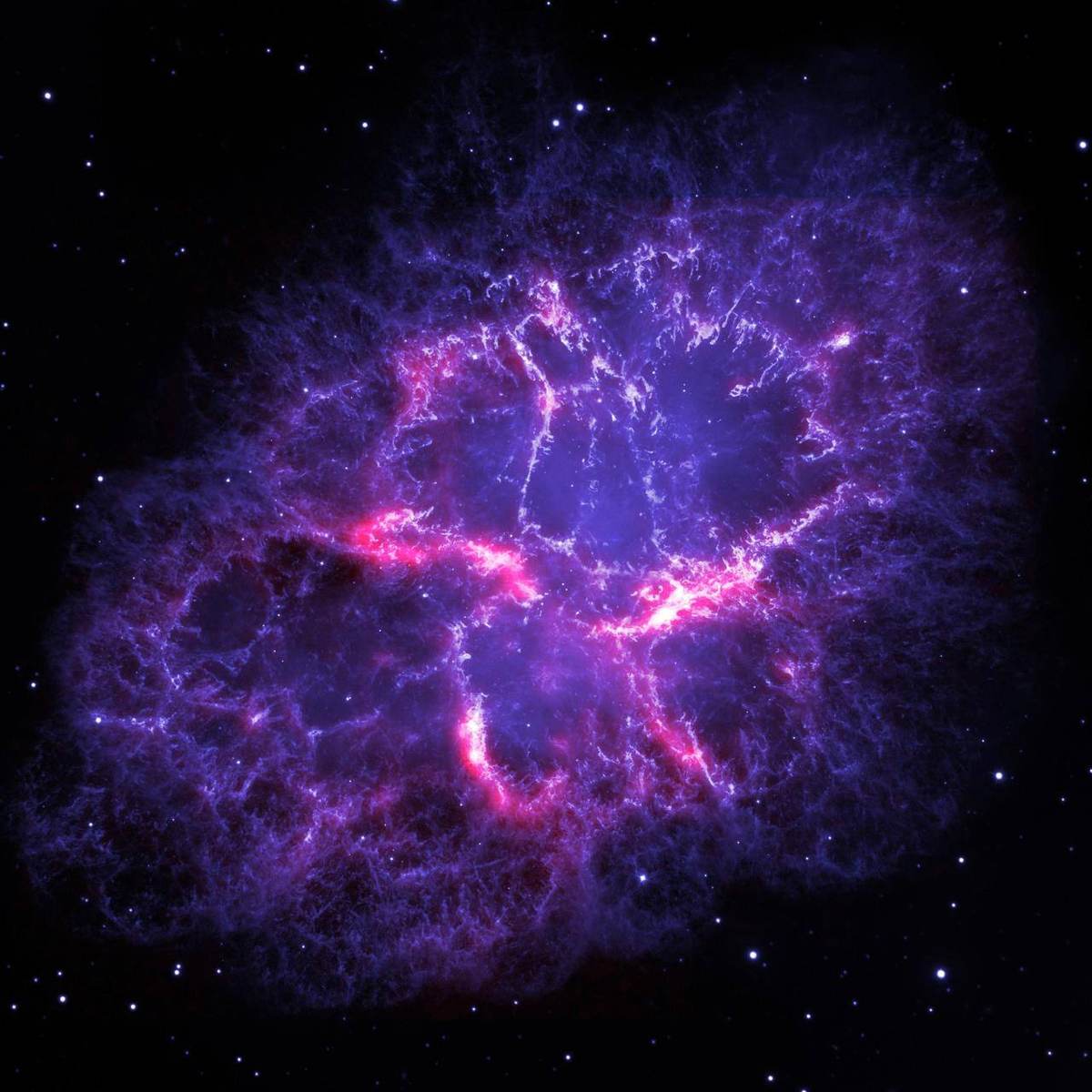
When stars die they return their elements to space. Massive stars explode as supernovae; smaller stars like the Sun puff off their outer layers gently, making glowing shells astronomers call planetary nebulae. That enriched gas cools, collapses and forms new stars. Our Sun formed about 4.6 billion years ago from a cloud already seeded by earlier generations.
Your body is a record of all this. About 10 per cent of your mass is hydrogen, nearly all of it made in the first few minutes after the Big Bang. The rest, almost everything else, was made in stars. In 2017 the Sloan Digital Sky Survey's APOGEE project measured elements in 150,000 stars and found that the main elements of life, carbon, hydrogen, nitrogen, oxygen, phosphorus and sulfur, are spread throughout our galaxy. Carl Sagan's line from 1980 was literally true: we are made of star-stuff.
Even the rarest atoms in you have stories. The iodine your thyroid needs and the trace of gold in your body were very likely forged in neutron-star collisions or supernovae. The iron carrying oxygen in your blood right now was largely made in exploding white dwarf stars.
What each faith says
Judaism
“Then the LORD God formed man of the dust of the ground, and breathed into his nostrils the breath of life; and man became a living soul.”
Genesis 2:7 · JPS 1917
The Torah says God 'formed man of the dust of the ground, and breathed into his nostrils the breath of life' (Genesis 2:7). The Hebrew for man, adam, echoes adamah, ground. Jewish tradition holds both halves together: we are earthly and fragile, and we carry a divine breath that makes us more than dust.
A saying attributed to the Hasidic teacher Rabbi Simcha Bunim of Peshischa advises keeping two slips of paper, one in each pocket. One says 'For my sake the world was created' (from the Mishnah, Sanhedrin 4:5). The other says 'I am but dust and ashes' (the words of Abraham (peace be upon him), Genesis 18:27). The art, he taught, is knowing which pocket to reach into.
Christianity
“For he knows how we are made. He remembers that we are dust.”
Psalm 103:14 · WEB
On Ash Wednesday, at the start of Lent, many Christians receive a cross of ash on the forehead with the words 'Remember that you are dust, and to dust you shall return', from Genesis 3:19. It is a moment of honesty about death and dependence on God. Psalm 103 adds tenderness: God 'remembers that we are dust'.
Christian hope does not end with dust. Christians believe in the resurrection of the body, that God who formed people from the earth once will raise them again, as they believe God raised Jesus (peace be upon him). Some Christian writers see the recycling of star-dust into living beings as a picture of that renewing power.
Islam
“From it We created you, into it We shall return you, and from it We shall bring you out once more.”
Qur'an 20:55 · our rendering
The Qur'an often reminds people that they were created from dust (turab) and clay, and that Adam (peace be upon him) was fashioned from the earth. It uses this as an argument for resurrection: the One who made you from dust the first time can bring you back. 'From it We created you, into it We shall return you, and from it We shall bring you out once more' (20:55).
A hadith says that God created Adam from a handful taken from all parts of the earth, and so his children came in all colours, red, white, black and in between, and all temperaments, gentle and harsh (Abu Dawud 4693; Tirmidhi 2955). The diversity of humanity is traced back to the variety of the earth's dust.
Same and different
All three faiths teach that humans are made from the earth and that this calls for humility, and all three teach that God will raise the dead. They agree that being dust is not the whole story. Christianity adds its belief in the resurrection of Jesus as the first sign of that new life; Judaism and Islam teach resurrection without that belief.
A moment to reflect
- Does it feel humbling or uplifting to know you are made of atoms from dead stars? Could it be both?
- Why do you think so many traditions remind people that they are dust?
- The atoms in you have been part of stars, rocks and other living things. What does that suggest about how connected we are?
- Which 'pocket' do you tend to reach into: 'the world was made for me' or 'I am dust and ashes'?
Watch
Smithsonian Channel explains in three and a half minutes how we are made of stardust.
A NASA scientist answers the question in ninety seconds.
TED-Ed traces where gold comes from, from supernovae to neutron-star collisions.
PBS Space Time goes deeper into how stars build the elements, for older students.
Do it together
List what your body needs: calcium (milk, bones), iron (spinach, blood), iodine (salt, thyroid). For each, look up which kind of star made it, using the 'Origin of the elements' periodic table from NASA or the University of Nottingham.
Visit a planetarium such as the Peter Harrison Planetarium at Royal Observatory Greenwich, the National Space Centre in Leicester or Jodrell Bank. Afterwards, share what each tradition says about where humans come from.
Go deeper
- How stars make elements (NASA Universe) · article
- The origin of the elements periodic table (Jennifer Johnson, Ohio State / SDSS) · article
- GW170817: neutron star collision (LIGO) · article
- Surah ar-Rum 30:20-25 (Quran.com) · scripture
- Genesis 2 (Sefaria) · scripture
Sources (8)
- Big Bang made mostly hydrogen and helium, plus a trace of lithium: NASA WMAP, light elements
- Cecilia Payne showed stars are mostly hydrogen and helium (1925): Britannica, Cecilia Payne-Gaposchkin
- Sun fuses about 600 million tonnes of hydrogen per second: NASA Science, Sun
- B2FH paper on stellar nucleosynthesis (1957): Burbidge et al., Reviews of Modern Physics 29, 547 (1957)
- GW170817 neutron-star merger and kilonova making heavy elements: LIGO Caltech press release, 16 October 2017
- Sun formed about 4.6 billion years ago: NASA Science, Sun facts
- APOGEE measured elements of life across 150,000 stars: SDSS press release, January 2017
- Origin of elements in the Solar System (iron largely from exploding white dwarfs): Johnson, Science 363, 474 (2019)