The 'lead' in a pencil and the diamond in a ring are made of exactly the same thing: pure carbon. The only difference is how the atoms hold hands. In graphite they lie in flat sheets that slide off onto paper. In diamond they lock into a three-dimensional frame that is the hardest natural material known.
Carbon is only about the fifteenth most common element in the Earth's crust, yet it is the backbone of every protein, every strand of DNA, every leaf and every loaf. When we talk about life as we know it, we mean carbon life.
“He who made fire for you out of the green tree, and see, you kindle from it.”
Qur'an 36:80 · our rendering
The verse answers someone who held up a crumbling bone and asked who could give it life again. The reply points to a familiar wonder: green, living wood, full of sap, becomes fuel that burns. Commentators such as Ibn Kathir mention desert trees whose green branches the Arabs rubbed together to make fire. Today we would say the tree stores sunlight in carbon, and fire releases it.
What science shows
Carbon has six protons and, crucially, four electrons in its outer shell. It can share them to make four strong bonds, with other carbon atoms or with hydrogen, oxygen, nitrogen and more. It can form chains, branches, rings and sheets of almost any length. That versatility is why chemists have catalogued many millions of carbon compounds, more than for all other elements combined. The study of them has its own name: organic chemistry.
About 18 per cent of your body mass is carbon. Sugars, fats, proteins and DNA are all built on carbon skeletons. Every time you breathe out, you release carbon atoms from food you ate as carbon dioxide; plants take them in again through photosynthesis. The carbon in you has been round this cycle countless times.
Carbon's forms keep surprising scientists. In 1985 Harold Kroto at the University of Sussex, with Robert Curl and Richard Smalley in Texas, discovered buckminsterfullerene, a ball of 60 carbon atoms shaped like a football; they shared the 1996 Nobel Prize in Chemistry. In 2004 Andre Geim and Konstantin Novoselov at the University of Manchester peeled single-atom-thick sheets of carbon, graphene, off graphite using sticky tape. It is around 200 times stronger than steel by weight and won the 2010 Nobel Prize in Physics.
Carbon also tells time. A small fraction of carbon is the radioactive isotope carbon-14, made in the upper atmosphere by cosmic rays. Living things take it in; when they die, it decays with a half-life of about 5,730 years. Willard Libby developed radiocarbon dating in 1949, and it has dated everything from the Dead Sea Scrolls to the Birmingham Qur'an manuscript, whose parchment was radiocarbon-dated by the University of Oxford in 2015 to between 568 and 645 CE.
And carbon was made in stars, through a lucky route. Three helium nuclei must meet almost at once, which works efficiently only because carbon-12 has an energy level at just the right place (see the episode A universe set just so?). Coal, oil and gas are ancient carbon from plants and plankton. Burning them has raised the carbon dioxide in our air from about 280 parts per million before the industrial era to over 420 today, measured continuously at Mauna Loa in Hawaii since 1958.
What each faith says
Judaism
“But wisdom, where shall it be found? And where is the place of understanding?”
Job 28:12 · JPS 1917
The Hebrew Bible does not discuss elements, but it delights in materials: the gold of Havilah, onyx and precious stones (Genesis 2:12), the twelve stones on the high priest's breastplate, each engraved with the name of a tribe (Exodus 28:17-21). Job 28 describes miners searching the deepest dark for treasures, and then asks where wisdom is found, answering that only God knows its place.
Jewish law on caring for creation, bal tashchit ('do not destroy'), comes from the Torah's command not to cut down fruit trees during a siege (Deuteronomy 20:19). Rabbis extended it to all wasteful destruction, and many Jewish groups today apply it to fuel and climate.
Christianity
“For by him all things were created, in the heavens and on the earth, things visible and things invisible, whether thrones or dominions or principalities or powers; all things have been created through him, and for him.”
Colossians 1:16 · WEB
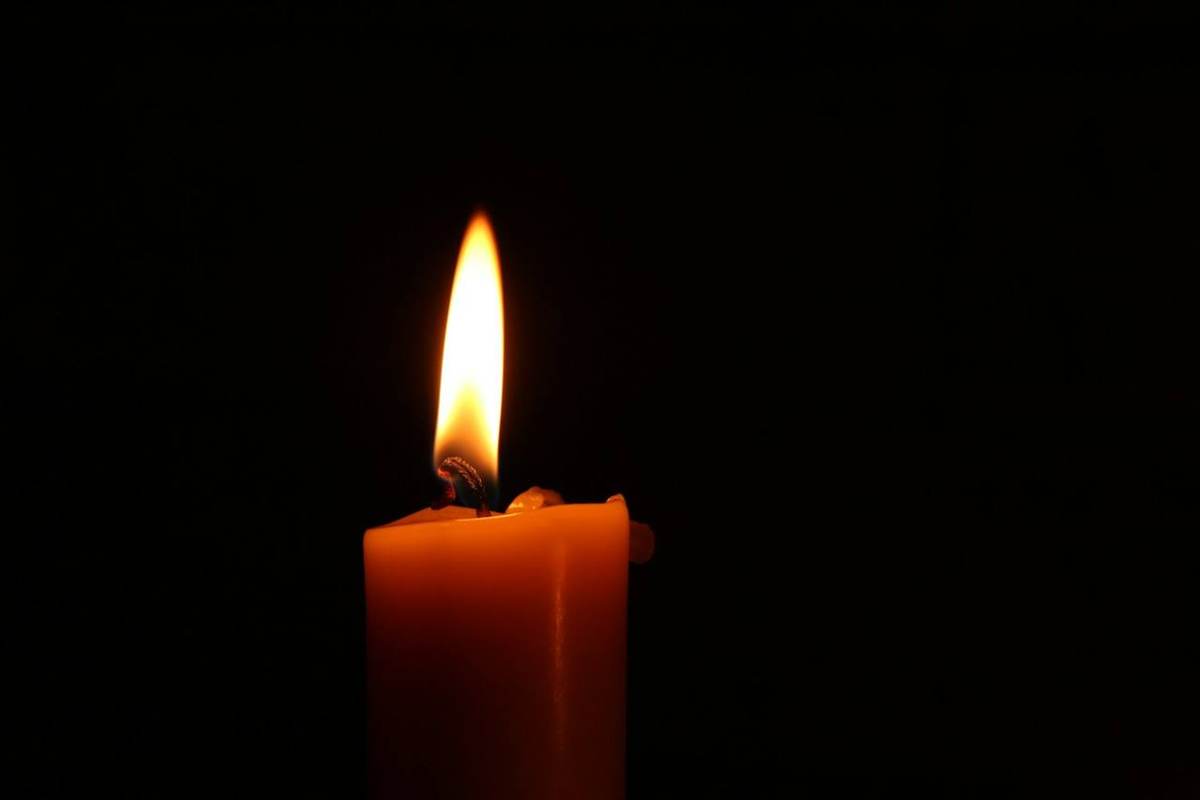
Christians see all things, visible and invisible, as created through Christ (Colossians 1:16). The Bible's images of fire are often of God's presence: the burning bush that is not consumed, the tongues of fire at Pentecost. A candle, carbon and wax burning steadily, is a common Christian symbol of prayer.
In 1848 and 1860 the Christian scientist Michael Faraday gave his famous Royal Institution Christmas Lectures, The Chemical History of a Candle, in which he showed children that a burning candle combines carbon from the wax with oxygen from the air, just as we do when we breathe. Faraday, a lifelong member of a small Protestant church, saw no conflict between his science and his faith.
Islam
“Have you seen the fire you kindle? Is it you who produced its tree, or are We the producers?”
Qur'an 56:71-72 · our rendering
The Qur'an uses fire from green wood as a sign of resurrection: if God can draw fire from a living, green tree, He can draw life from dry bones (36:78-81). It also lists fire among the things people should reflect on: 'Have you seen the fire you kindle? Is it you who produced its tree, or are We the producers?' (56:71-72).
Islamic teaching calls humans khalifah, stewards, on the earth (2:30), entrusted with its balance (mizan): 'Do not upset the balance' (55:8). Many Muslim environmental groups apply this to the carbon in our air. A hadith says that if the Final Hour comes while you hold a sapling in your hand, you should still plant it (Musnad Ahmad 12902).
Same and different
All three faiths see the material world as created and good, warn against waste and destruction, and give humans responsibility to care for it. They differ in emphasis: Judaism draws on detailed laws such as bal tashchit, Christianity on creation through Christ and the call to love one's neighbour, Islam on stewardship (khilafah) and the balance (mizan) set by God.
A moment to reflect
- The same element makes soot and diamonds. Is there a lesson in that for people?
- You are breathing out carbon that was once in plants, animals and perhaps dinosaurs. How does that make you feel about the living world?
- What does being a steward, rather than an owner, of the earth mean in practice?
- Why do you think fire appears so often in scripture as a sign?
Watch
Periodic Videos on carbon, from diamond to the stuff of life.
Crash Course Biology on why carbon builds life.
TED-Ed on the carbon cycle in four minutes.
NASA's model of a year of carbon dioxide swirling round the planet.
Do it together
With an adult, light a candle and hold a cold spoon briefly in the flame to collect soot: that is carbon from the wax. Then read a page of Faraday's Chemical History of a Candle, free online.
Join with a local mosque, church, synagogue or school to plant trees (the Woodland Trust offers free packs to schools and communities). Share the hadith of the sapling and the law of bal tashchit.
For one week, notice what you eat, burn and throw away. Then choose one change together, as an act of care for creation.
Go deeper
- Carbon (Royal Society of Chemistry) · article
- Graphene (University of Manchester) · article
- Trends in atmospheric CO2 (NOAA Global Monitoring Laboratory) · article
- Faraday, The Chemical History of a Candle (Project Gutenberg) · article
- Surah Ya Sin 36:77-83 (Quran.com) · scripture
Sources (9)
- Carbon forms four bonds; millions of organic compounds: Royal Society of Chemistry, Carbon
- About 18% of body mass is carbon: OpenStax Anatomy and Physiology 2e, 2.1
- Discovery of C60 in 1985; Nobel 1996: Nobel Prize in Chemistry 1996
- Graphene isolated in Manchester in 2004; Nobel 2010: Nobel Prize in Physics 2010
- Graphene about 200 times stronger than steel: University of Manchester, Graphene
- Radiocarbon dating developed by Libby; half-life about 5,730 years: American Chemical Society, Radiocarbon dating landmark
- Birmingham Qur'an parchment radiocarbon-dated to 568-645 CE (2015): University of Birmingham, 2015
- Atmospheric CO2 above 420 ppm; Mauna Loa record since 1958: NOAA Global Monitoring Laboratory
- Faraday's Christmas Lectures on the candle (1848, 1860): Royal Institution, Christmas Lectures history