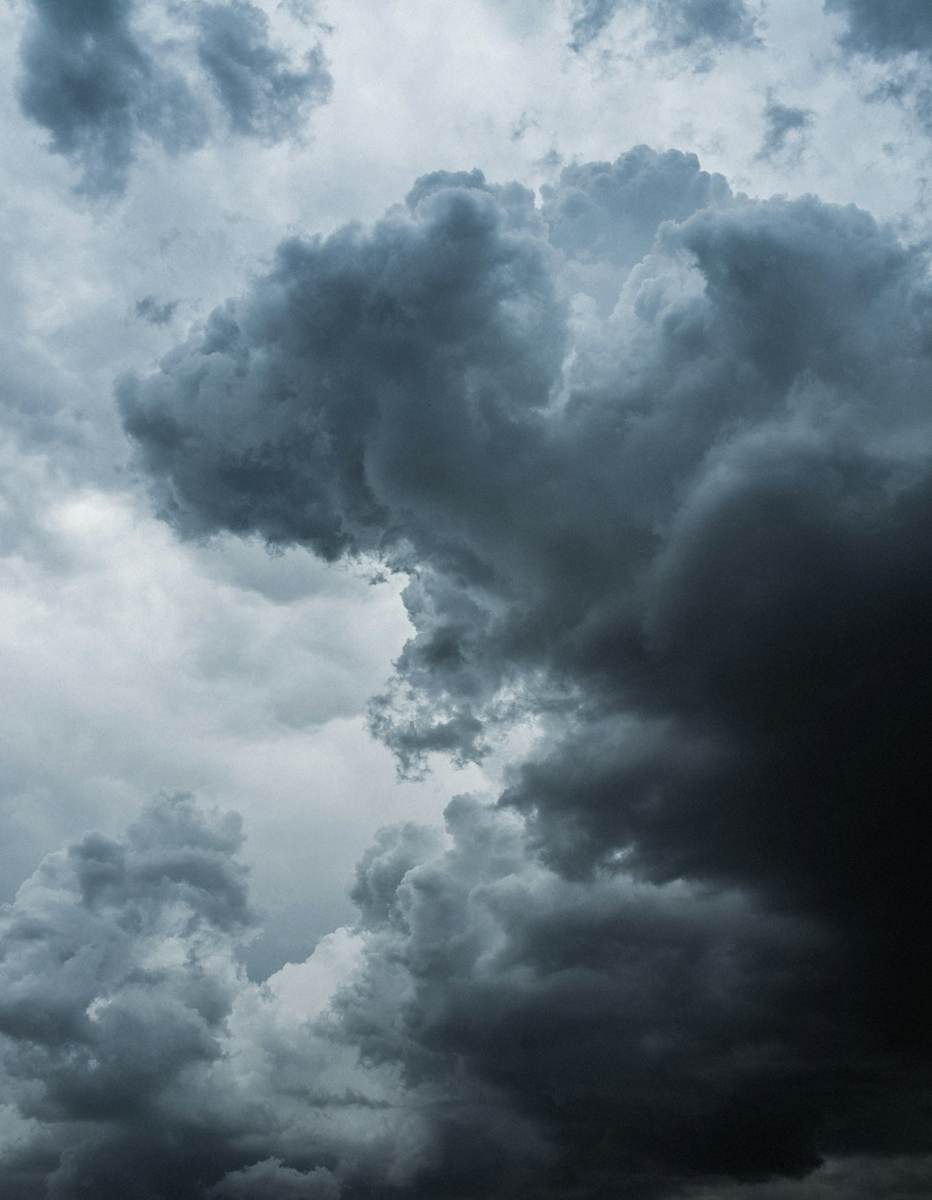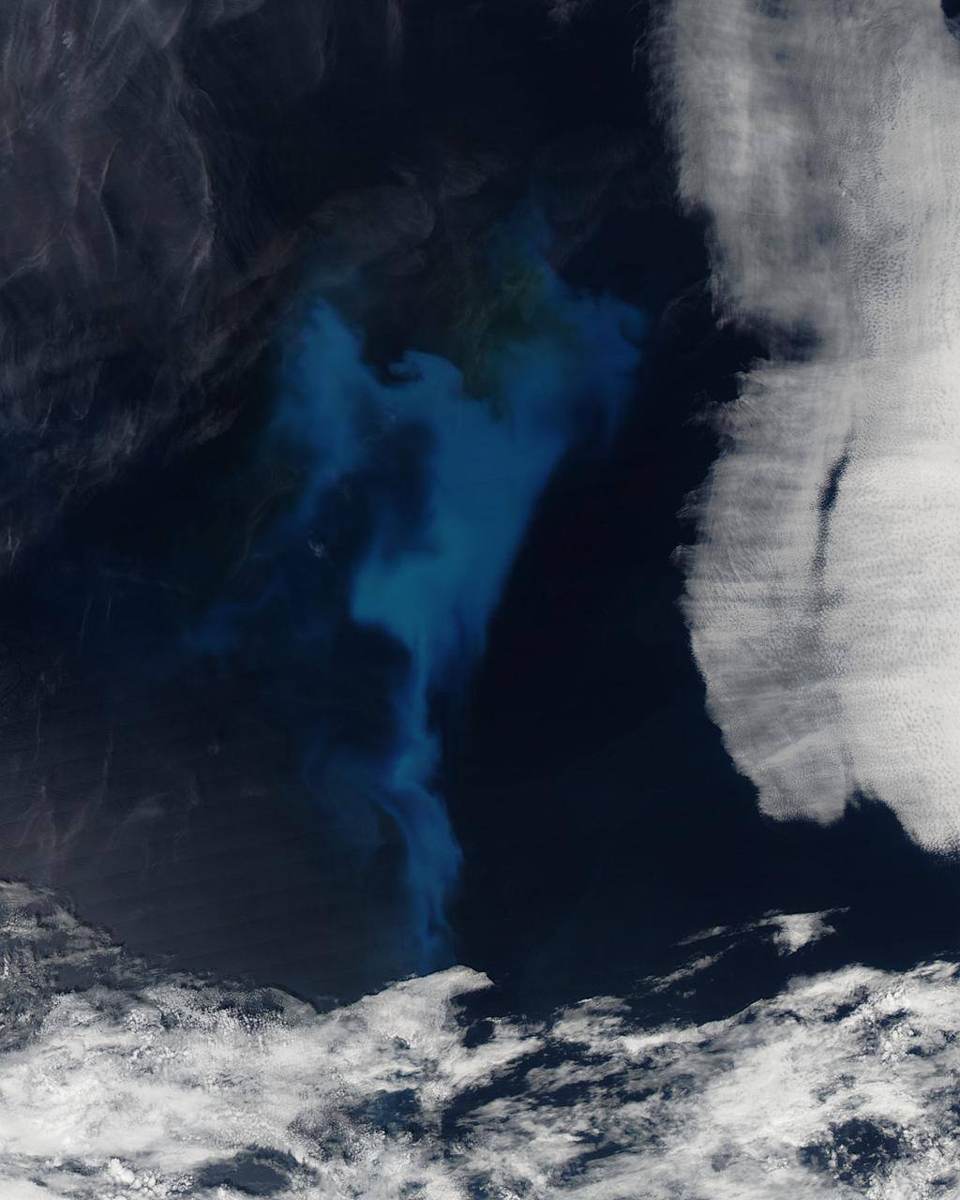
Astronauts often say the same thing when they first see the Earth from orbit: how thin the atmosphere looks. A pale blue line along the curve of the planet, and then black space. If the Earth were the size of an apple, everything we breathe and every cloud we have ever seen would fit in a layer thinner than its skin.
That thin line does a remarkable amount of work. It keeps us warm, stops most of the Sun's harmful ultraviolet light, carries rain, and catches dozens of tonnes of space rock every day before it can reach the ground. Most of the time we forget it is even there.
“And We made the sky a protected canopy, yet they turn away from its signs.”
Qur'an 21:32 · our rendering
Classical commentators read 'protected' (mahfuz) in several ways: kept from falling, held in place, or guarded from evil forces. Some modern writers read it as a reference to the ozone layer or magnetic field. We do not make that claim; the verse speaks of protection in a way every age could understand. Its main point is the second half: people see the sky every day and do not stop to notice it.
What science shows
Dry air is about 78 per cent nitrogen, 21 per cent oxygen, almost 1 per cent argon, and about 0.04 per cent carbon dioxide, with traces of other gases and varying amounts of water vapour. The atmosphere has no sharp top, but by convention space begins at the Kármán line, 100 kilometres up. Half of all the air lies below about 5.5 kilometres, lower than the summit of Everest.
The atmosphere is layered. The troposphere, up to about 10 to 15 kilometres, holds nearly all our weather. Above it, in the stratosphere, the ozone layer between about 15 and 35 kilometres absorbs most of the Sun's harmful ultraviolet radiation. In 1985 British Antarctic Survey scientists Joe Farman, Brian Gardiner and Jonathan Shanklin reported a 'hole' in it. The Montreal Protocol of 1987 banned the chemicals responsible, and the United Nations reported in 2023 that the ozone layer is on course to recover by around 2066 over Antarctica.
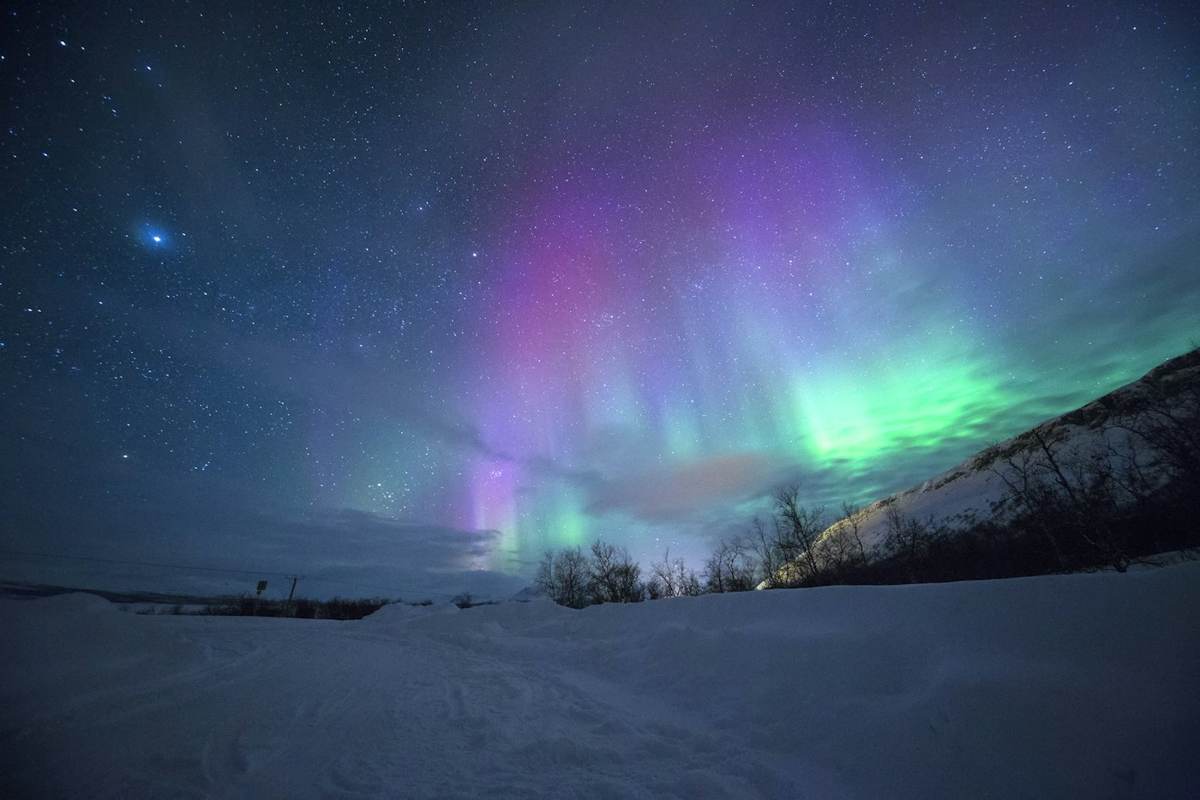
The air also protects us from space rock. NASA estimates that about 48 tonnes of meteoroid material falls into Earth's atmosphere every day, nearly all of it as dust and tiny grains that burn up as shooting stars. Beyond the atmosphere, Earth's magnetic field, generated by the molten iron in its outer core, deflects most of the charged particles streaming from the Sun. Where some get through near the poles, they make the aurora.
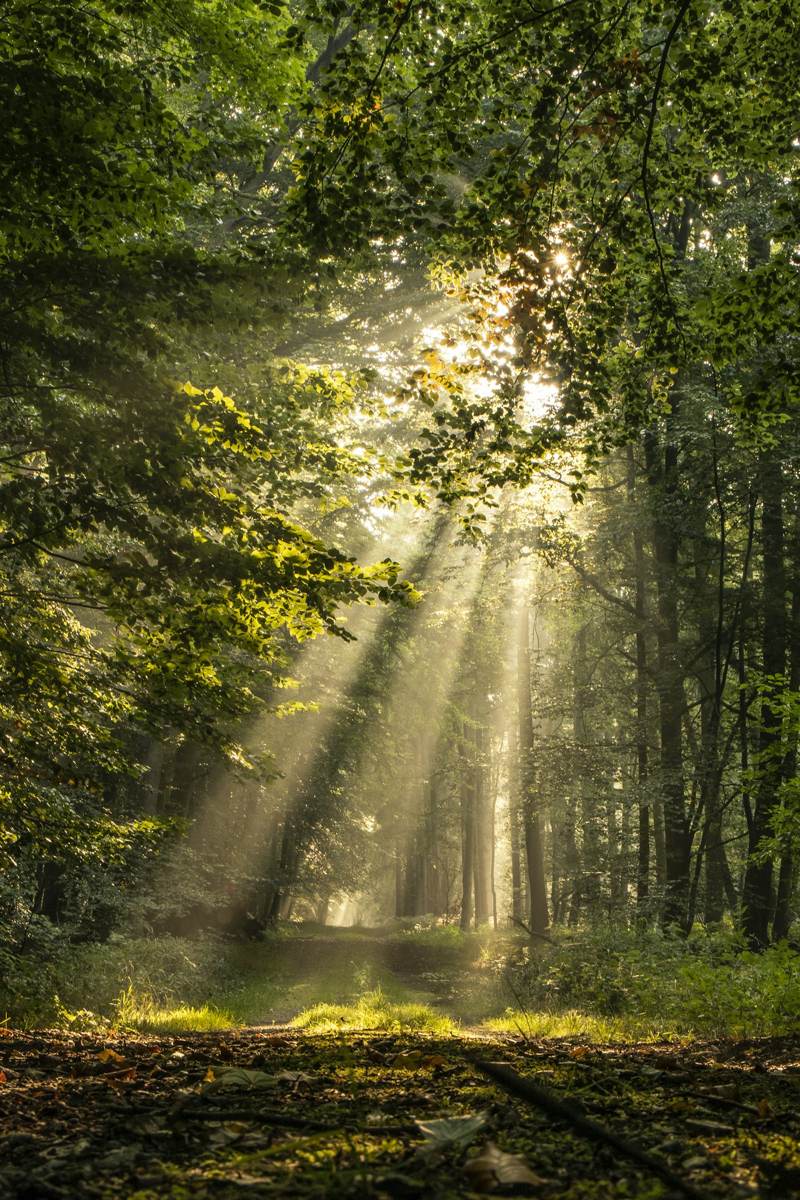
Why is the sky blue? Sunlight contains all colours. Molecules of air scatter shorter, bluer wavelengths much more than longer, redder ones, an effect explained by Lord Rayleigh in the 1870s. So blue light comes at us from every part of the sky. At sunset, light travels through more air, the blue is scattered away, and the sky glows red and orange.
Greenhouse gases such as carbon dioxide and water vapour keep the Earth around 33 degrees warmer than it would otherwise be, which makes it habitable. But since the industrial revolution, extra carbon dioxide from burning fossil fuels has thickened that blanket. NASA and the UK Met Office record that the last decade has included the warmest years on record.
The oxygen itself is a gift of life. For the Earth's first two billion years there was almost no oxygen in the air. It was released by photosynthesis in ocean microbes and later plants. Joseph Priestley, the English minister-chemist, isolated oxygen in 1774 (Carl Scheele in Sweden had found it slightly earlier). Every breath you take is borrowed from living things.
What each faith says
Judaism
“It is He that sitteth above the circle of the earth, And the inhabitants thereof are as grasshoppers; That stretcheth out the heavens as a curtain, And spreadeth them out as a tent to dwell in”
Isaiah 40:22 · JPS 1917
On the second day of creation God makes a raqia, a 'firmament' or expanse, to separate the waters above from the waters below (Genesis 1:6-7). The prophet Isaiah (peace be upon him) pictures God stretching out the heavens 'as a curtain' and spreading them 'as a tent to dwell in' (Isaiah 40:22): a sheltering canopy over the earth's people.
Breath is life in Hebrew thought. God breathes 'the breath of life' into the first human (Genesis 2:7), and the final psalm ends: 'Let every thing that hath breath praise the LORD' (Psalm 150:6). The rabbis, playing on the Hebrew words, taught that a person should praise God for every single breath (Genesis Rabbah 14:9).
Christianity
“The God who made the world and all things in it, he, being Lord of heaven and earth, doesn’t dwell in temples made with hands, neither is he served by men’s hands, as though he needed anything, seeing he himself gives to all life and breath, and all things.”
Acts 17:24-25 · WEB
Paul told the philosophers of Athens that God 'gives to all life and breath, and all things' and is 'not far from each one of us', quoting a Greek poet: 'In him we live, and move, and have our being' (Acts 17:24-28). In both Hebrew and Greek, the words for 'spirit' and 'breath' or 'wind' are the same (ruach, pneuma), so Christians speak of the Holy Spirit as the breath of God.
Many Christians today see protecting the atmosphere as part of loving their neighbour. The Church of England, the Catholic Church and other denominations have committed to cutting their carbon emissions, and the World Council of Churches has campaigned on climate justice for decades.
Islam
“He raised the sky and set up the balance, so that you do not transgress the balance.”
Qur'an 55:7-8 · our rendering
The Qur'an lists the winds and clouds among God's signs: 'In the creation of the heavens and the earth, the alternation of night and day, the ships that sail the sea... and in the turning of the winds and the clouds held between sky and earth, there are signs for people who use their reason' (2:164). The sky is described as 'a roof' and 'a structure' (2:22, 40:64).
Muslim teaching on the environment draws on the idea of the mizan, the balance God has set: 'He raised the sky and set up the balance, so that you do not transgress the balance' (55:7-8). Many British mosques have joined eco-mosque programmes, cutting energy use and teaching that keeping the air clean is part of caring for God's creation.
Same and different
All three faiths see the sky as a sheltering gift and breath as the sign of God-given life, and all three now call on believers to care for the air as part of caring for creation. Their pictures differ: the firmament and tent in the Hebrew Bible, the Spirit as God's breath in Christianity (understood as a divine person), and the protected roof and the balance in the Qur'an.
A moment to reflect
- When did you last stop and look at the sky? What did you notice?
- Every breath you take was released by a living thing. How does that change how you think about breathing?
- The ozone layer is healing because nations agreed to act. What does that suggest about other problems?
- Why do so many languages use the same word for breath, wind and spirit?
Watch
Brian Cox flies to the edge of the atmosphere to see how thin it really is.
NASA's model of carbon dioxide moving through the atmosphere over a year.
NASA explains Earth's magnetic shield in under four minutes.
Thirty seconds of the aurora seen from the International Space Station.
Do it together
Balance two blown-up balloons on a stick, then pop one with a pin. The side with air sinks, showing air has weight. Above every square metre of ground sits about 10 tonnes of it.
Pick a meteor shower night (the Perseids in mid-August or the Geminids in mid-December). Lie on blankets together away from street lights and count the shooting stars: each one is a grain of space dust burning up in our protective air.
Run a 'walk or cycle to worship or school' week together, and measure how many car journeys you saved. Share a verse from each tradition about the breath of life.
Go deeper
- Earth's atmosphere: a multi-layered cake (NASA Science) · article
- Farman, Gardiner and Shanklin, the ozone-hole paper (Nature, 1985) · paper
- Why is the sky blue? (NASA Space Place) · article
- Surah al-Anbiya 21:30-33 (Quran.com) · scripture
- Isaiah 40 (Sefaria) · scripture
Sources (9)
- Composition of dry air: NASA Earth Fact Sheet
- Karman line at 100 km; half the atmosphere below about 5.5 km: NOAA / National Weather Service JetStream, Layers of the atmosphere
- Ozone layer location and function: NASA Ozone Watch
- Ozone hole discovered by BAS scientists, 1985: Farman, Gardiner and Shanklin, Nature 315, 207 (1985)
- Ozone layer on track to recover by about 2066 over Antarctica: UNEP / WMO Scientific Assessment, January 2023
- About 48.5 tonnes of meteoritic material falls on Earth each day: NASA, Meteors and meteorites facts
- Rayleigh scattering makes the sky blue: NASA Space Place
- Natural greenhouse effect keeps Earth about 33 °C warmer: Met Office, The greenhouse effect
- Priestley isolated oxygen in 1774; Scheele independently earlier: American Chemical Society, Priestley landmark