In 2023 the Court of Appeal in London quashed the conviction of Andrew Malkinson, who had spent seventeen years in prison for a crime DNA evidence later showed he did not commit. A court had once been sure. Then the truth came out, and the court changed its mind.
Most of what we call true is like that: honest, careful, and open to correction. al-Ḥaqq is a different kind of word. It means the Truth, and also the Real: not the best account we have of things, but the One whose reality every true thing borrows.
Start with what we know
Then take away everything it needs. What is left is not a bigger version of us. It is the Name.
Episode 1
In us
Human truth-finding is one of our best achievements and one of our most fragile. Courts weigh evidence, scientists repeat experiments, journalists check sources. In England the Criminal Cases Review Commission exists because juries sometimes get it wrong: Andrew Malkinson's conviction for a 2003 attack in Salford was quashed in July 2023 after new DNA testing pointed to another man. The system corrected itself, but only after seventeen years of a life. Our grasp of what is real depends on our senses, our instruments, our honesty and our time. We reach for truth. We hold it in pieces, and we keep revising.
Episode 2
In nature
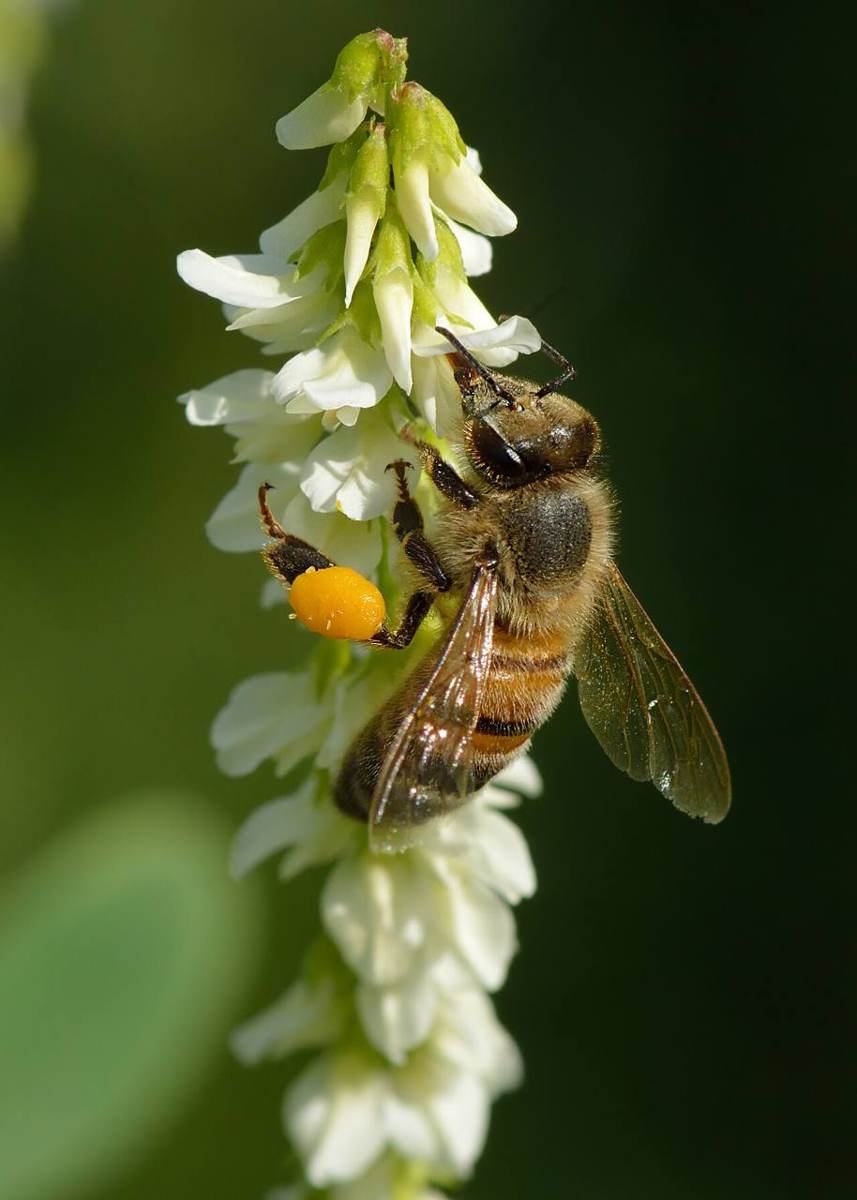
Animals live or die by true signals. A wasp's yellow and black stripes are an honest warning: this one stings. Many hoverflies, which cannot sting at all, wear the same stripes, and birds that have learnt the lesson leave them alone. Biologists call this Batesian mimicry, after Henry Walter Bates, who described it in Amazon butterflies in 1862. It works because predators cannot always tell the real from the copy. In nature a signal can be true or false, and the creature reading it has only its eyes, its memory and a split second to decide.
Episode 3
At our best
On 20 May 2019 the world's measuring system changed. The International System of Units now rests on seven constants of nature fixed as exact numbers: the speed of light is exactly 299,792,458 metres a second, and the kilogram is defined through the Planck constant, 6.626 070 15 × 10⁻³⁴ joule-seconds. It was agreed at the General Conference on Weights and Measures in Versailles in November 2018. It is one of the most precise things humans have ever done. And yet we fixed the numbers by agreement. We did not make the constants. We describe what is; we do not make it so.
Episode 4
The Break
Take away the senses that can be fooled, the evidence that arrives late, the verdicts that are revised, and the measurer who did not make what he measures. Every true thing we know is true because it matches something real outside it. al-Ḥaqq is that Real, the One whose being is not borrowed. al-Ghazālī put it simply: al-Ḥaqq exists by Himself, and everything else exists by Him. “That is God, your Lord, the Truth. And what is there beyond the truth except going astray?” (Qur'an 10:32, our rendering)
From the tradition: Prophetic: 'You are the Truth, and Your promise is the truth' (tahajjud prayer, Bukhari 1120). Labīd's verse 'Everything except Allah is perishable (bāṭil)' called 'the truest words said by a poet' (Bukhari 3841, 6489). Ghazālī: al-Ḥaqq is what exists by itself, all else exists by Him.
On screen
The Matrix asks whether the world is real. al-Ḥaqq answers a deeper question: what makes anything real at all.
Jeremiah 10:10 'the ETERNAL is truly God, a living God'; Deut 32:4 'a faithful God, never false'; John 14:6 (Christian claim about Christ; state it as theirs). Strong.
In the universe
ESA Planck's measured contents of the universe (4.9% ordinary matter): most of what is real is not what we see.
In nature
: 'What Actually Expands in an Expanding Universe?' (Veritasium) as a 'what is real?' explainer.
In people
Wrongful convictions overturned on new evidence: human truth-finding is honest but revisable.
In science
Physics: the defining constants (c, h, e, k, N_A); the 2019 SI redefinition (kilogram now defined via h).
Living it
Truthfulness: say what is so, and accept correction.
Its kind
Beyond: majesty: what He is not, and how far beyond.
Before he was a prophet, Muhammad (peace be upon him) was known in Mecca as al-Amīn, the trustworthy one. When the verse came telling him to warn his own people, he climbed the low hill of Ṣafā near the Kaʿba and called out to the clans of Quraysh, one by one, until they gathered. Those who could not come sent someone to listen for them.
He asked them a simple question. If I told you that there were horsemen in the valley about to attack you, would you believe me? They said yes: we have never known you to say anything but the truth. Only then did he tell them his message, that he was a warner sent to them.
Not everyone welcomed what he said that day; his own uncle, Abū Lahab, turned on him. But the story is remembered for its first moment. Before he spoke about God, he asked his people to weigh his word. The tradition sees a link: the One he spoke of is al-Ḥaqq, and the one who spoke had made truthfulness his whole reputation. (Bukhari 4770, narrated by Ibn ʿAbbās)
What each faith says
Judaism
“But the LORD God is the true God, He is the living God, and the everlasting King”
The Hebrew Bible keeps putting truth and life together when it speaks of God. Jeremiah, mocking idols that have to be carried because they cannot walk, says by contrast that the LORD is “the true God”. The Hebrew word emet, truth, also carries the sense of firmness and faithfulness: something you can lean on without it giving way.
The rabbis of the Talmud said that “the seal of the Holy One, blessed be He, is truth” (Shabbat 55a). They noticed that emet is spelled with the first, middle and last letters of the Hebrew alphabet, as if truth runs through everything from beginning to end.
Christianity
“Jesus (peace be upon him) said to him, “I am the way, the truth, and the life. No one comes to the Father, except through me.”
Christians speak of God as faithful and true, the One who cannot lie. In John's Gospel the link between truth and freedom is made directly: “You will know the truth, and the truth will make you free” (John 8:32).
Christians also make a claim that is theirs to make: that Jesus (peace be upon him) is himself the truth. In John 14:6 he says, “I am the way, the truth, and the life.” For Christians this is the heart of their faith; it is one of the points where Muslims and Christians honestly differ, since in Islam Jesus (peace be upon him) is a prophet who pointed to al-Ḥaqq rather than being al-Ḥaqq.
Islam
“That is because God is the Truth, and whatever they call upon besides Him is falsehood, and because God is the Most High, the Great.”
al-Ḥaqq appears in the Qur'an as a Name of God several times: “That is because God is the Truth, and what they call upon besides Him is falsehood” (22:62). On the Day of Judgement, it says, people “will know that God is the clear Truth” (24:25). The opposite of ḥaqq is bāṭil: what is empty, what does not last.
In his night prayer the Prophet (peace be upon him) would say, “You are the Truth, Your promise is true, meeting You is true” (Bukhari 1120). Muslims draw a practical lesson from the Name: say what is so, keep your word, and accept correction when you are wrong.
Same and different
All three traditions say that God is true and faithful, that God does not lie, and that human beings are called to truthfulness. Judaism and Islam both say that truth belongs to God alone in the full sense. Christianity adds its own belief that the truth was made known in a person, Jesus (peace be upon him), which Jews and Muslims do not share.
A moment to reflect
When did you last change your mind about something you were sure was true? What changed it?
Is there a difference between something being true and something being real?
Why do you think so many traditions link truthfulness with trust?
Watch
Watch on YouTube ↗ · plays here on the live site; YouTube without tracking until you press play
A careful explainer that shows how even our picture of 'what is real' in the universe has had to be corrected.
Watch on YouTube ↗ · plays here on the live site; YouTube without tracking until you press play
The US national measurement institute explains how the kilogram is now tied to a constant of nature.
Watch on YouTube ↗ · plays here on the live site; YouTube without tracking until you press play
A short guide to hoverflies and the harmless insects that wear a wasp's warning colours.
Do it together
families / schoolsReal or copy?
Collect photos of wasps, bees and hoverflies and see who can sort them correctly. Talk about how birds face the same test, and how we decide what to trust.
faith groups / neighboursThe correction circle
Each person shares one thing they once believed and later found was wrong. No judging. Finish by reading Qur'an 10:32, Jeremiah 10:10 and John 8:32 aloud and asking what the three have in common.
 Episode 1