Every time you look at the Moon you are seeing sunlight that bounced off grey rock and travelled 384,000 kilometres into your eye in just over a second. When you look at the faint smudge of the Andromeda galaxy, the light entering your eye left it about 2.5 million years ago, long before there were humans to see it.
Light lets us see everything, yet nobody has ever seen light itself travelling past. We only see it when it lands on something. For a thousand years, scientists in Basra, Cairo, Cambridge and Bern have tried to say what it is. Their answers are among the strangest in all of science.
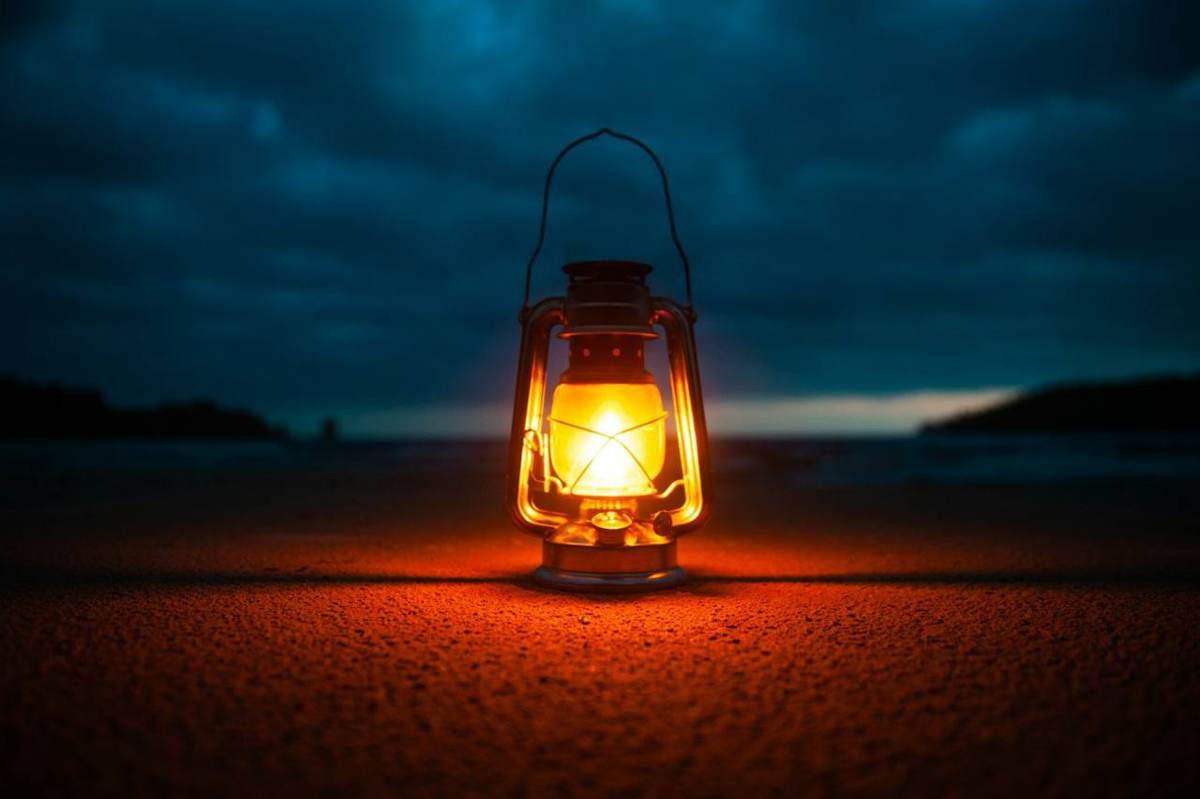
“God is the Light of the heavens and the earth. The likeness of His light is a niche in which there is a lamp; the lamp is in a glass; the glass is like a shining star, lit from a blessed olive tree, neither of the east nor of the west, whose oil would almost glow even if no fire touched it. Light upon light. God guides to His light whom He wills.”
Qur'an 24:35 · our rendering
This is the 'Verse of Light', one of the most loved and discussed passages in the Qur'an. It is a parable, not a physics lesson: Muslim scholars read the lamp as the light of guidance in a believer's heart. Al-Ghazali wrote a whole book on it, The Niche of Lights. We place it here because the physical light the verse uses as its picture is itself a wonder.
What science shows
Light travels at exactly 299,792,458 metres per second in empty space. That number is exact because, since 1983, the metre has been defined by it: a metre is the distance light travels in 1/299,792,458 of a second. Nothing with mass can reach that speed. In Einstein's theory of relativity, the speed of light is the same for every observer, however fast they are moving, which is why time and space have to stretch to keep it constant.
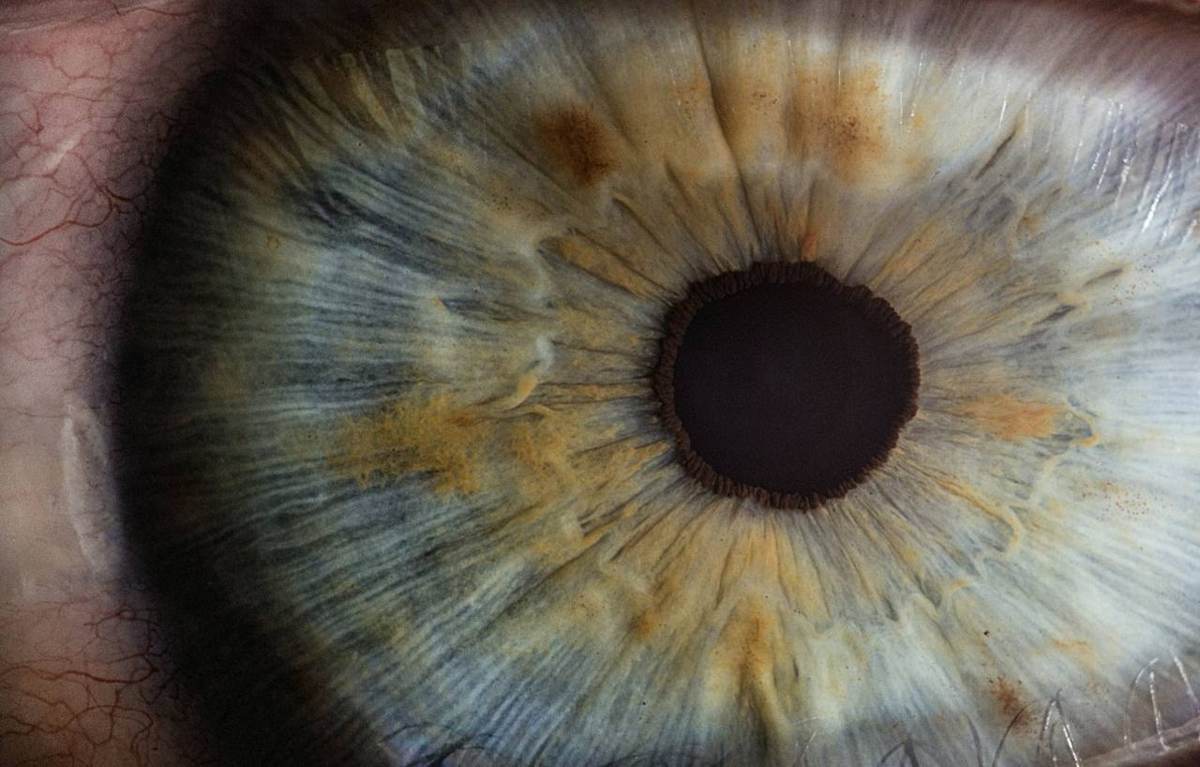
Around the year 1011 to 1021, the scholar Ibn al-Haytham (known in Europe as Alhazen), working in Cairo, wrote the Book of Optics. He argued from careful experiments with dark rooms, pinholes and lenses that we see because light travels from objects into the eye, not because the eye sends out rays as many Greek thinkers believed. He insisted on testing ideas by experiment, and he is often called one of the founders of the scientific method. UNESCO marked the 1,000th anniversary of his work in the International Year of Light, 2015.
In the 1860s James Clerk Maxwell, a Scottish physicist and devout Christian, showed with four equations that light is a wave of electricity and magnetism. The light our eyes see is a narrow slice of a much wider spectrum, from radio waves metres long to gamma rays smaller than an atom. Visible light runs only from about 380 to 700 nanometres. Bees see ultraviolet; snakes sense infrared.
Then in 1905 Einstein showed that light also comes in tiny packets of energy, later called photons. Light behaves like a wave when it spreads and like a particle when it lands. Physicists still describe this with quantum theory rather than a simple picture. Your eye is sensitive enough to notice, at least some of the time, a single photon: in a 2016 experiment at Rockefeller University volunteers detected single photons slightly better than chance.
Light is also a time machine. The Sun's light is 8 minutes old when it reaches you. Energy produced in the Sun's core can take tens of thousands of years or more to work its way out to the surface before it sets off. And the oldest light of all, the cosmic microwave background, was released about 380,000 years after the Big Bang, when the universe first became transparent. ESA's Planck satellite mapped it across the whole sky.
What each faith says
Judaism
“For with Thee is the fountain of life; In Thy light do we see light.”
Psalm 36:10 (36:9 in many English Bibles) · JPS 1917
The first words God speaks in the Torah are 'Let there be light' (Genesis 1:3). Jewish commentators noticed that this light comes on the first day, before the Sun and Moon on the fourth, and many read it as a special, hidden light of creation. The Talmud (Chagigah 12a) teaches that this first light was stored away for the righteous in the world to come.
Light marks Jewish time and worship: Shabbat candles lit on Friday evening, the eternal lamp (ner tamid) in every synagogue, and the eight nights of Chanukah. The psalmist uses light as a picture of knowing God: in God's light we see light.
Christianity
“In him was life, and the life was the light of men. The light shines in the darkness, and the darkness hasn’t overcome it.”
John 1:4-5 · WEB
Christian scripture speaks of God as light without darkness (1 John 1:5), and John's Gospel opens with light shining in the darkness. Christians believe that Jesus (peace be upon him) called himself 'the light of the world' (John 8:12), so light carries a personal meaning: God's truth made visible in a person.
Many Christian scientists saw their work on light as a form of worship. Psalm 111:2, 'Great are the works of the Lord, sought out of all them that have pleasure therein', was carved in Latin on the doors of the Cavendish Laboratory in Cambridge, almost certainly at Maxwell's suggestion. Much of modern physics was done behind those doors.
Islam
“Light upon light. God guides to His light whom He wills.”
Qur'an 24:35 · our rendering
An-Nur, 'the Light', is one of the 99 Names of God, taken from the Verse of Light. Muslim scholars stress that God is not physical light; rather, God is the source of all light, the One by whom everything is made visible and understood. Al-Ghazali wrote that, compared with God's light, every other light is borrowed.
The Qur'an also distinguishes kinds of light with care: it calls the Sun a shining lamp (siraj) and the Moon a light (nur) (71:16). Ibn al-Haytham, a devout Muslim, wrote that the search for truth is hard and that the seeker should trust demonstration, not reputation, even his own. For many Muslims his experiments are an example of reflecting on creation as the Qur'an asks.
Same and different
All three faiths use light as their most natural picture of God's presence, truth and guidance, and all three mark sacred time with lamps and candles. They differ in what they mean by it: Judaism and Islam keep light as a picture of a God who has no body or form, while Christians also apply it to Jesus as the light of God shown in a human life.
A moment to reflect
- Light from distant stars is very old by the time we see it. Does that change how the night sky feels to you?
- Why do you think light became a picture of goodness and truth in so many traditions?
- Ibn al-Haytham said a seeker should test even his own ideas. Is that hard to do? Why?
- Light behaves like a wave and a particle at once. Are there other things in life that only make sense from two angles?
Watch
A clear five-minute animated answer to what light actually is.
A Royal Institution lecture on why light exists at all, for older students and adults.
Veritasium on a surprising question: has anyone ever measured the speed of light one way?
A short film on Ibn al-Haytham and his experiments with light and sight.
Do it together
Cover a window with card, make a small hole, and watch an upside-down image of the outdoors appear on the opposite wall. This is the experiment Ibn al-Haytham described a thousand years ago. A shoebox and tracing paper work too.
Hold an evening where each tradition brings its lamp or candle: Shabbat candles, a church candle or Advent wreath, a Ramadan lantern. Each person explains in two minutes what their light means.
Shine a torch or sunlight through a glass of water onto white paper to split light into its colours. Talk about how the light we see is only a sliver of all the light there is.
Go deeper
- Ibn al-Haytham (Britannica) · article
- Planck and the cosmic microwave background (ESA) · article
- Direct detection of a single photon by humans (Nature Communications, 2016) · paper
- Surah an-Nur 24:35 (Quran.com) · scripture
- Genesis 1 (Sefaria) · scripture
- John 1 (Bible Gateway, WEB) · scripture
Sources (9)
- The metre is defined by the speed of light, 299,792,458 m/s: BIPM, SI Brochure
- Ibn al-Haytham's Book of Optics and intromission theory of vision: Britannica, Ibn al-Haytham
- 2015 International Year of Light marked 1,000 years of Ibn al-Haytham's optics: International Year of Light 2015 (UNESCO)
- Maxwell's equations show light is an electromagnetic wave: Britannica, James Clerk Maxwell
- Visible light is about 380 to 700 nanometres: NASA Science, Visible Light
- Humans can detect single photons slightly better than chance: Tinsley et al., Nature Communications 7, 12172 (2016)
- Cosmic microwave background released about 380,000 years after the Big Bang: ESA, Planck and the CMB
- Energy takes a long time to travel from the Sun's core to its surface: NASA, Sun facts
- Psalm 111:2 inscribed over the Cavendish Laboratory door: Faraday Institute for Science and Religion, Cambridge