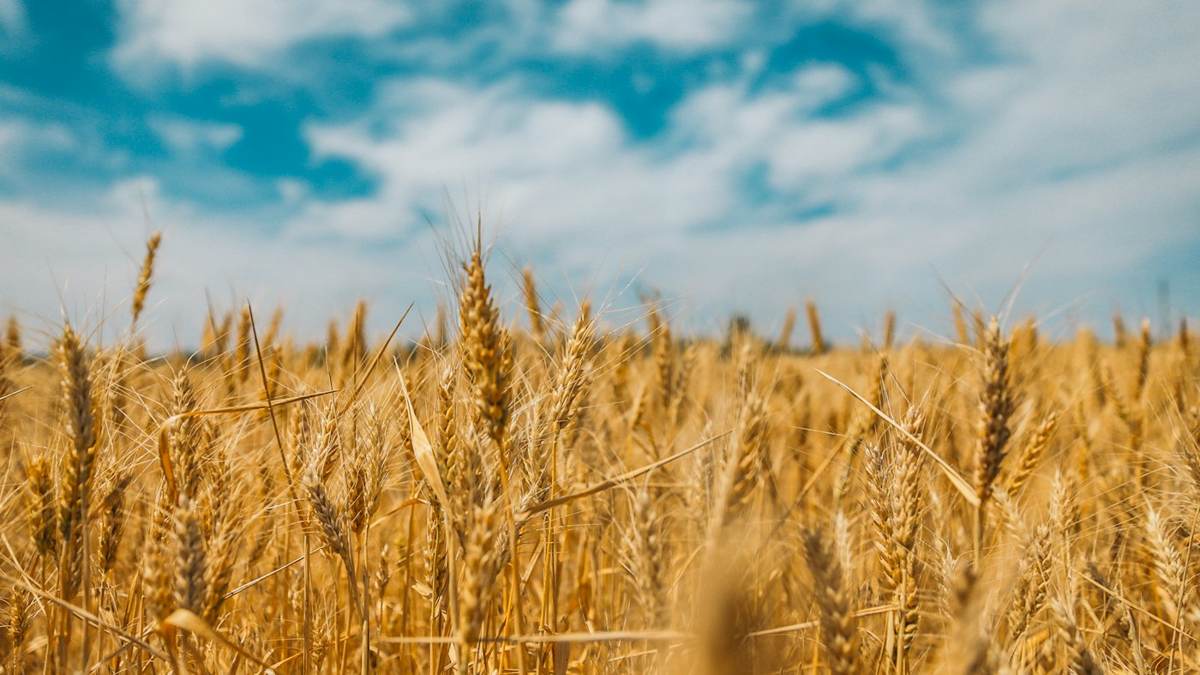
About half the people alive today are fed thanks to one chemical reaction, invented in Germany before the First World War, that pulls nitrogen out of the air to make fertiliser.
Long before that, bacteria in the roots of peas and beans had been doing the same, quietly, for free. al-Mughnī, the Enricher, names the One who makes rich, from a store that never empties.
Start with what we know
Then take away everything it needs. What is left is not a bigger version of us. It is the Name.
Episode 1
In us
People enrich each other all the time: with wages, gifts, inheritance, charity. Muslims give zakāt, a share of their savings, to the poor every year; Jews give tzedakah; Christians give alms and tithes. Families working abroad send money home that keeps whole villages going. It is real wealth, passed hand to hand. But human enriching always moves wealth from one place to another. The giver has less afterwards, or works harder to make it back. We enrich only from what is limited, and our giving runs out.
Episode 2
In nature
Peas, beans and clover have small lumps on their roots called nodules. Inside them live Rhizobium bacteria that can do something plants cannot: take nitrogen gas from the air and turn it into a form plants can use to build proteins. The plant gives the bacteria sugar in return. Farmers have known for centuries that planting clover enriches a field. But the bargain has a cost. The plant pays the bacteria with its own sugars, and the bacteria enrich only the soil around them.
Episode 3
At our best
In 1909 Fritz Haber found a way to combine nitrogen from the air with hydrogen to make ammonia, and Carl Bosch scaled it up for industry. Our World in Data estimates that synthetic nitrogen fertiliser from the Haber-Bosch process now supports approximately half of the global population. It may be the most important invention of the twentieth century. But it needs vast amounts of energy, mostly from fossil fuels, and runoff pollutes rivers and seas. Our greatest enriching comes with a heavy cost.
Episode 4
The Break
Take away scarcity, cost, effort and depletion. Every enricher we know gives from a limited store, or pays for each gift with something else. al-Mughnī enriches from no store that empties, and His giving costs Him nothing. Scholars add that the deepest enrichment He gives is of the heart: to be content. The Qur'an says it to the Prophet (peace be upon him), who was an orphan and poor: “Did He not find you in need, and make you rich?” (Qur'an 93:8, our rendering).
When the early Muslims emigrated from Mecca to Medina in 622, many arrived with nothing. They had left their homes, their businesses and their savings behind. The Prophet Muhammad (peace be upon him) paired each emigrant with one of the people of Medina as a brother.
ʿAbd al-Raḥmān ibn ʿAwf was paired with Saʿd ibn al-Rabīʿ, one of the richest men in Medina. Saʿd made an astonishing offer. I have more wealth than anyone here, he said. I will give you half of everything I own.
ʿAbd al-Raḥmān thanked him warmly and said: I do not need all that. May God bless you in your family and your wealth. Just show me where the market is.
Saʿd pointed him to the market of the Banū Qaynuqāʿ. ʿAbd al-Raḥmān went there and began trading, buying and selling butter and cheese. Before long he was on his feet, and in time he became one of the wealthiest and most generous of the Companions. (Bukhari 2048)
Both men are honoured in the story: Saʿd for his openhanded offer, ʿAbd al-Raḥmān for his dignity. Both knew where real riches come from.
What each faith says
Judaism
“The blessing of the LORD, it maketh rich, And toil addeth nothing thereto.”
Proverbs says: “The blessing of the LORD, it maketh rich, and toil addeth nothing thereto.” It does not mean work is pointless; Jewish teaching values labour highly. It means the final source of wealth is God.
The Bible tells of a widow at Zarephath who shared her last flour and oil with the prophet Elijah (peace be upon him), and found that “the jar of meal was not spent, neither did the cruse of oil fail” (1 Kings 17:16).
Christianity
“And God is able to make all grace abound to you, that you, always having all sufficiency in everything, may abound to every good work.”
Paul encouraged the Christians in Corinth to give generously, promising that “God is able to make all grace abound to you, that you, always having all sufficiency in everything, may abound to every good work.”
Jesus (peace be upon him) told his followers to seek God's kingdom first, “and all these things will be given to you as well” (Matthew 6:33), and warned against storing up treasure that moth and rust destroy.
al-Mughnī comes from the verb aghnā, to make rich: “It is He who makes rich and gives contentment” (53:48). The Qur'an promises that when a marriage ends, God will enrich each partner from His abundance (4:130).
The Prophet said: wealth is not having many possessions; true wealth is a contented soul (Bukhari 6446). Muslims see zakāt as a way of purifying wealth and passing on what God has given.
Same and different
Proverbs, Paul and the Qur'an all teach that God is the source of wealth and that generosity does not leave the giver poorer in the end. Tzedakah, Christian giving and zakāt are close cousins. They differ in their rules and in how they connect giving to worship, each in its own tradition.
A moment to reflect
What has enriched your life that cost nothing?
Is it easier to give or to receive help? Why?
What did ʿAbd al-Raḥmān mean by 'show me the market'?
Watch
Watch on YouTube ↗ · plays here on the live site; YouTube without tracking until you press play
TED-Ed on the Haber-Bosch reaction that feeds half the world.
Watch on YouTube ↗ · plays here on the live site; YouTube without tracking until you press play
Attenborough on seeds and the green world that enriches every living thing.
Do it together
families / schoolsRoot nodule hunt
Carefully dig up a clover plant or a pea plant at the end of the season and wash its roots. Look for the pink nodules where bacteria live. Read Qur'an 53:48 and Proverbs 10:22.
neighbours / faith groupsShow me the market
Help someone new to your area, such as a refugee family, find the practical things they need: the market, the library, the GP. Share the story of Saʿd and ʿAbd al-Raḥmān.
 Episode 1