Every day, NHS Blood and Transplant needs around 4,300 blood donations to keep hospitals in England supplied. Most of the people who give will never meet the people they help.
Goodness is everywhere, much of it unseen. al-Barr names the One who is the source of all goodness, whose kindness does not tire or run out.
Start with what we know
Then take away everything it needs. What is left is not a bigger version of us. It is the Name.
Episode 1
In us
The Arabic word birr, from the same root as al-Barr, is used above all for kindness to parents: birr al-wālidayn. Across the UK millions of people care, unpaid, for an older parent, a disabled child or a sick partner, washing, feeding and keeping them company. It is goodness at its most ordinary and its most heroic. But human goodness tires. It chooses whom it helps. It can be soured by resentment, and it runs out when we do. Even our best kindness is limited by our energy, our attention and our love.
Episode 2
In nature
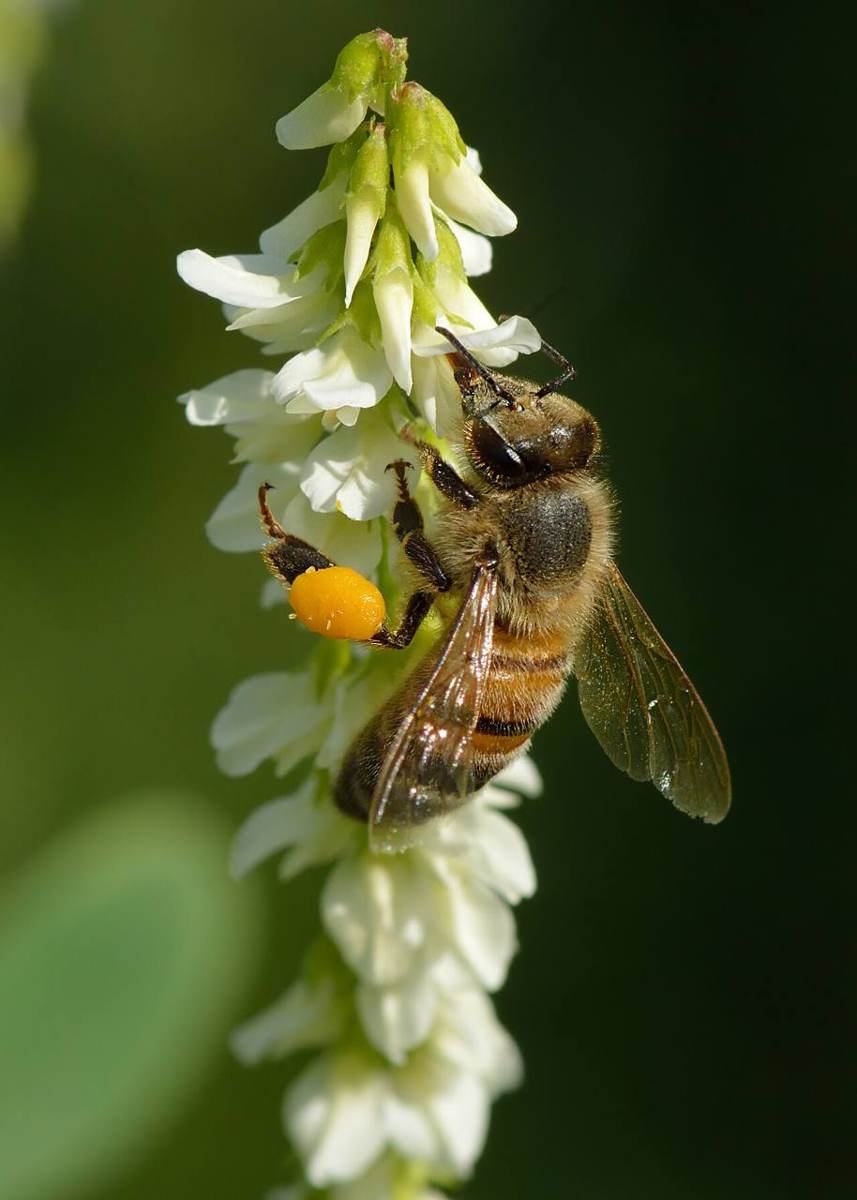
Pollinators, mostly insects such as bees, hoverflies and moths, carry pollen from flower to flower. According to Our World in Data, citing the UN Food and Agriculture Organization, about three-quarters of the world's crop types benefit from animal pollinators, though because staples like wheat and rice are wind-pollinated, they account for around a third of food production by volume. The bee gives this gift without knowing it, simply by feeding itself. Nature's goodness is real, and unintended.
Episode 3
At our best
NHS Blood and Transplant says it needs about 4,300 blood donations on an average day, and well over 100,000 new donors each year, including thousands more donors of Black heritage to help people with sickle cell disease who need regular transfusions. Giving blood is goodness organised: freely given, carefully tested and delivered to strangers. It is one of the clearest examples of a whole society being kind. Yet every donor gives what they first received, a body and blood they did not make.
Episode 4
The Break
Take away mood, reward, depletion, and the limits of who we know. The bee gives without knowing; the donor gives knowing, but only a pint. al-Barr gives knowing, to everyone, and is not emptied. Scholars describe Him as the source of all goodness, from whom every kindness in creation flows. The people of Paradise say of Him in the Qur'an: “We used to call on Him before. He is the Good, the Most Merciful” (Qur'an 52:28, our rendering).
The Prophet Muhammad (peace be upon him) told his companions a story.
A man was walking along a road on a burning day when he became desperately thirsty. He found a well, climbed down into it, drank, and climbed out again.
At the top he saw a dog panting, its tongue hanging out, licking the damp earth because it was so thirsty. The man thought: this dog is suffering the same thirst I just suffered. So he climbed down into the well again, filled his leather sock with water, held it in his teeth as he climbed back up, and gave the dog a drink.
God thanked him for it and forgave him.
The companions were surprised. Messenger of God, they asked, is there a reward for us even in animals? He said: there is a reward for kindness to every living thing. (Bukhari 2363)
The story is short, but it says a lot about birr. The man was not paid and no one was watching. He saw his own thirst in another creature and acted on it. And the Lord who saw it, al-Barr, met that small goodness with a far greater one.
What each faith says
Judaism
“The LORD is good to all; And His tender mercies are over all His works.”
Psalm 145, said daily in the Ashrei, insists that God's goodness has no favourites: “The LORD is good to all; and His tender mercies are over all His works.” The Torah also forbids cruelty to animals; the rabbis call it tza'ar ba'alei ḥayyim, the suffering of living creatures.
The Hebrew word ḥesed, loving-kindness, is often used of God's goodness, and acts of ḥesed, such as visiting the sick, are central to Jewish life.
Christianity
“Jesus (peace be upon him) said to him, “Why do you call me good? No one is good except one—God.”
When a man called Jesus (peace be upon him) “Good teacher”, he answered: “Why do you call me good? No one is good except one—God.” Christians read this in different ways, but all agree that goodness has its source in God.
Jesus (peace be upon him) also pointed to God's goodness to everyone without distinction: He makes the sun rise on the evil and the good, and sends rain on the just and the unjust (Matthew 5:45).
Islam
“We used to call on Him before. He is the Good, the Most Merciful.”
al-Barr appears once in the Qur'an, at 52:28. The root b-r-r gives birr, righteousness and kindness, and the Qur'an defines it not as rituals but as faith and generous action: giving to relatives, orphans, the needy and the traveller, keeping promises and staying patient (2:177).
Muslims speak of birr al-wālidayn, goodness to parents, as one of the greatest of deeds after belief in God.
Same and different
All three faiths say goodness comes from God and that kindness to animals and strangers matters. Ḥesed, charity and birr overlap closely. They differ mainly in how they speak about Jesus (peace be upon him)' words on goodness: Christians see them as pointing to his divinity, while Muslims and Jews do not.
A moment to reflect
What is the kindest thing a stranger has ever done for you?
Why do you think the story chose a dog, of all animals?
What small goodness could you do this week that no one would notice?
Watch
Watch on YouTube ↗ · plays here on the live site; YouTube without tracking until you press play
NHS Give Blood follows a donation from the arm to the patient.
Watch on YouTube ↗ · plays here on the live site; YouTube without tracking until you press play
BBC Earth's waggle dance: how bees share the flowers they pollinate.
Do it together
faith groups / neighboursGive blood together
Book a group donation session at a local NHS blood centre. Those who cannot give can bring snacks or babysit. Read Psalm 145:9 and the well story together afterwards.
schools / familiesBee café
Plant a pot of pollinator-friendly flowers such as lavender or marjoram and count the insects that visit over a week. Talk about goodness that is given without knowing.
 Episode 1