In 1792 two French astronomers set out to measure the Earth, so that a new unit, the metre, could be one ten-millionth of the distance from the North Pole to the equator. Seven years of surveying later, their answer was out by about a fifth of a millimetre.
That is astonishingly good, and still not exact. al-Muqtadir, the Omnipotent Determiner, names the One who sets the measure of everything, with no error to correct.
Start with what we know
Then take away everything it needs. What is left is not a bigger version of us. It is the Name.
Episode 1
In us
Pierre Méchain and Jean-Baptiste Delambre surveyed from Dunkirk to Barcelona between 1792 and 1799, through revolution and war, to fix the length of the metre. Méchain was haunted for the rest of his life by a small inconsistency in his own readings that he never admitted. The platinum metre bar made from their work turned out to be about 0.2 millimetres short of their goal. Every human measurement carries some uncertainty. We can shrink it, with better tools and honesty about our errors, but we can never make it zero.
Episode 2
In nature
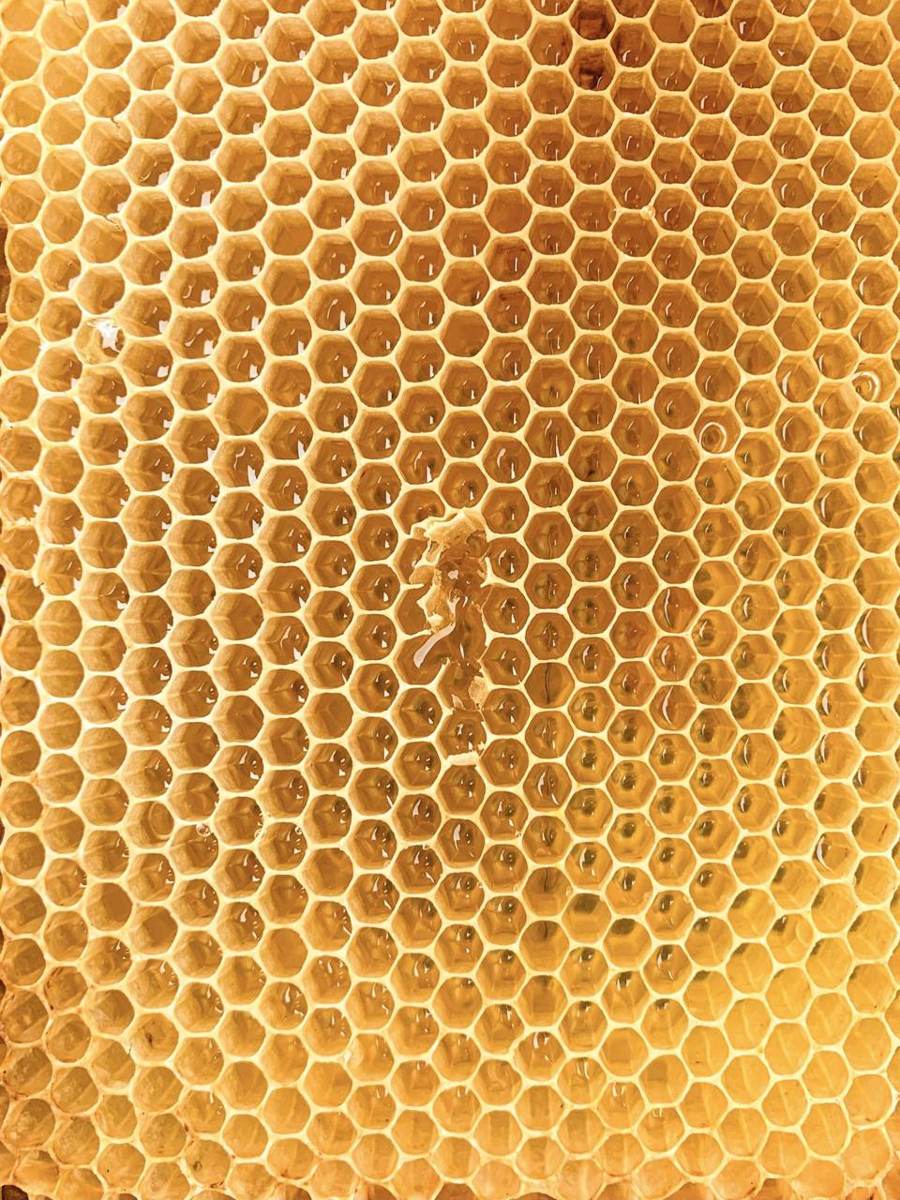
Honeybees build their combs from wax they make in their own bodies, shaping cells into hexagons, the shape that uses the least wax to store the most honey. Mathematicians took until 1999 to prove that hexagons are the most efficient way to divide a flat surface into equal areas, when Thomas Hales published a proof of the 'honeycomb conjecture'. Yet real bee cells are not perfect hexagons: they vary in size and angle, and the wax is soft at the edges. Nature measures beautifully, within a tolerance.
Episode 3
At our best
In 2024 physicists at JILA in Colorado reported a strontium atomic clock with a systematic uncertainty of 8.1 × 10⁻¹⁹: the most accurate clock ever made, sensitive enough to notice that time runs faster a few centimetres higher up. Since 2019 the world's units have rested on constants of nature fixed exactly. It is the most precise measuring humans have ever done. But even here, we fix numbers we did not choose. We can measure the constants; we cannot set them.
Episode 4
The Break
Take away trial, error, tolerance, adjustment and the uncertainty in the last decimal place. Every measure we make is an approximation of a measure we did not make. al-Muqtadir, said al-Ghazālī, is the intensive form of al-Qādir: power that determines everything exactly. The same Arabic root, q-d-r, gives qadar, measure or decree. Questions about why the constants are what they are remain open in science and philosophy; the Qur'an simply says: “We have created everything in due measure” (Qur'an 54:49, our rendering).
The Qur'an tells a parable of two men. One was given two fine gardens of vines, ringed with date palms, with crops between them and a stream running through. Both gardens gave their full harvest, year after year.
One day he walked into his garden with his friend, who had far less, and boasted: I have more wealth than you and more people behind me. Looking around, he said: I do not think this will ever perish. And I do not think the Hour will come; even if I am returned to my Lord, I will find something better there.
His friend answered gently: do you disbelieve in the One who created you from dust? Why did you not say, when you entered your garden, mā shāʾa llāh, lā quwwata illā billāh: “this is what God willed; there is no strength except through God”?
That night the fruit was destroyed. In the morning the man stood wringing his hands over what he had spent on it, the vines fallen on their trellises, and said: I wish I had not set anyone beside my Lord. (Qur'an 18:32-43)
The passage ends with a picture of all worldly life: rain falls, plants grow green, then dry and scatter on the wind. “God is Omnipotent over all things” (18:45), muqtadir.
What each faith says
Judaism
“Who hath measured the waters in the hollow of his hand, And meted out heaven with the span, And comprehended the dust of the earth in a measure, And weighed the mountains in scales, And the hills in a balance?”
Isaiah 40 pictures God measuring the universe as a builder might measure a room: the waters in the hollow of His hand, the heavens with the span of His fingers, the mountains on scales.
The Book of Job (peace be upon him) has God ask Job a string of questions about the making of the world, including “Who determined the measures thereof, if thou knowest?” (Job 38:5). The point is not to belittle Job but to widen his eyes.
Christianity
“Aren’t two sparrows sold for an assarion coin? Not one of them falls on the ground apart from your Father’s will, but the very hairs of your head are all numbered.”
Jesus (peace be upon him) used the smallest measures to make the biggest point: not one sparrow falls without the Father, and even the hairs of your head are numbered. For Christians, God's exact knowledge and power are reasons for trust, not fear.
Christian thinkers from Augustine onwards loved a line from the Book of Wisdom, part of the Bible for Catholics and Orthodox: God “ordered all things in measure, number and weight” (Wisdom 11:20).
al-Muqtadir appears in the Qur'an a few times, including the description of the righteous seated “in the presence of a Sovereign, Omnipotent” (54:55). It shares its root with qadar, the measure God gives to each thing.
Muslims say mā shāʾa llāh, “what God has willed”, when they admire something, as the friend in the parable advised: a habit of remembering whose measure it is.
Same and different
Isaiah's measuring hand, the numbered sparrows and the Qur'an's 'due measure' say that God's knowledge and power reach the smallest detail. All three faiths draw trust and humility from it. They have long debated in their own ways how God's decree relates to human freedom, and none reduces the answer to a slogan.
A moment to reflect
What is the most precise thing you have ever had to measure?
Why do you think people say mā shāʾa llāh, or 'God willing', when they admire something?
Does knowing that everything has a measure feel freeing or limiting?
Watch
Watch on YouTube ↗ · plays here on the live site; YouTube without tracking until you press play
TED-Ed on why honeybees build hexagons, and the maths that took until 1999 to prove.
Watch on YouTube ↗ · plays here on the live site; YouTube without tracking until you press play
New Scientist on optical atomic clocks, the most precise instruments ever built.
Do it together
schools / familiesMeasure a hexagon
Get a piece of real honeycomb or a photo with a ruler beside it. Measure ten cells and see how much they vary. Then try drawing perfect hexagons yourself.
faith groups / neighboursThe two gardens
Visit an allotment or community garden. Read the parable of the two gardens (Qur'an 18:32-45) and Isaiah 40:12 together, and talk about what we can grow and what we cannot control.
 Episode 1