On 12 November 2014 the little lander Philae bounced onto a comet and vanished into a shadowy crack. For almost two years nobody knew exactly where it was. Then, in September 2016, a photograph found it.
We lose things, and we search. al-Wājid, the Finder, is the One who lacks nothing and loses no one. He finds without having to look.
Start with what we know
Then take away everything it needs. What is left is not a bigger version of us. It is the Name.
Episode 1
In us
Our memories leak. In the 1880s the German psychologist Hermann Ebbinghaus tested himself on lists of nonsense syllables and found that much of what we learn is forgotten within hours unless we go over it again: the 'forgetting curve'. We lose keys and passwords, lose touch with friends, lose our way in unfamiliar towns. Searching is part of being human, and finding is one of our deepest joys, whether it is a child found in a supermarket or an old friend found online. But our finding depends on memory, sight, time and luck. Some things we lose we never find.
Episode 2
In nature
Loggerhead sea turtles hatch on a beach, swim into the ocean and wander for years across thousands of kilometres. Then the females come back to nest near where they were born. In 2015 J. Roger Brothers and Kenneth Lohmann of the University of North Carolina showed in Current Biology that they do it by imprinting on the unique magnetic 'signature' of their home beach. It is astonishing navigation. But the turtle can find only the place it once knew, and only while the magnetic field holds steady. It finds by searching, and it can be lost.
Episode 3
At our best
The European Space Agency's Rosetta mission landed Philae on Comet 67P in 2014. The lander bounced, came to rest in a dark crack, and its batteries soon ran down. It sent a few last messages in 2015 and fell silent. On 2 September 2016, just weeks before Rosetta's own mission ended, its high-resolution camera spotted Philae wedged on its side. It was a triumph of patience. But it was found too late to speak to. We find only what we can still see, or what still sends a signal.
Episode 4
The Break
Take away the searching, the forgetting, the need for a signal and the luck of a photograph. Every finder we know has first had to lose, and then to look. al-Wājid does not search, because nothing is hidden from Him, and does not lose, because nothing is outside Him. al-Ghazālī explained the Name as the One who lacks nothing. The Qur'an says it to an orphaned child who grew up to be a prophet: “Did He not find you an orphan and give you shelter? He found you wandering and guided you” (Qur'an 93:6-7, our rendering).
Read: No wājid form in the Qur'an; the verb wajada of God at 93:6–8.
From the tradition: 'Allah is more pleased with the repentance of His slave than anyone of you is pleased with finding his camel which he had lost in the desert' (Bukhari 6309); Muslim (API 6960): the man who in joy says 'You are my servant and I am Your Lord'. Ghazālī: al-Wājid lacks nothing.
On screen
Marlin crosses an ocean to find his son. al-Wājid did not have to search: (93:6).
Luke 15 (the lost sheep, coin, son); no Jewish name parallel. Moderate (Christian).
In the universe
Voyager 2 'shout' (JPL 2023).
In nature
Sea turtles find their natal beach by magnetic signature (Brothers & Lohmann, Current Biology 2015).
In people
Lost-and-found reunions (e.g. RNLI searches).
In science
Conservation of mass-energy: in a closed system nothing is lost, only transformed.
Living it
Seek out the lost and lonely.
Its kind
Beyond: majesty: what He is not, and how far beyond.
In the Qur'an: none
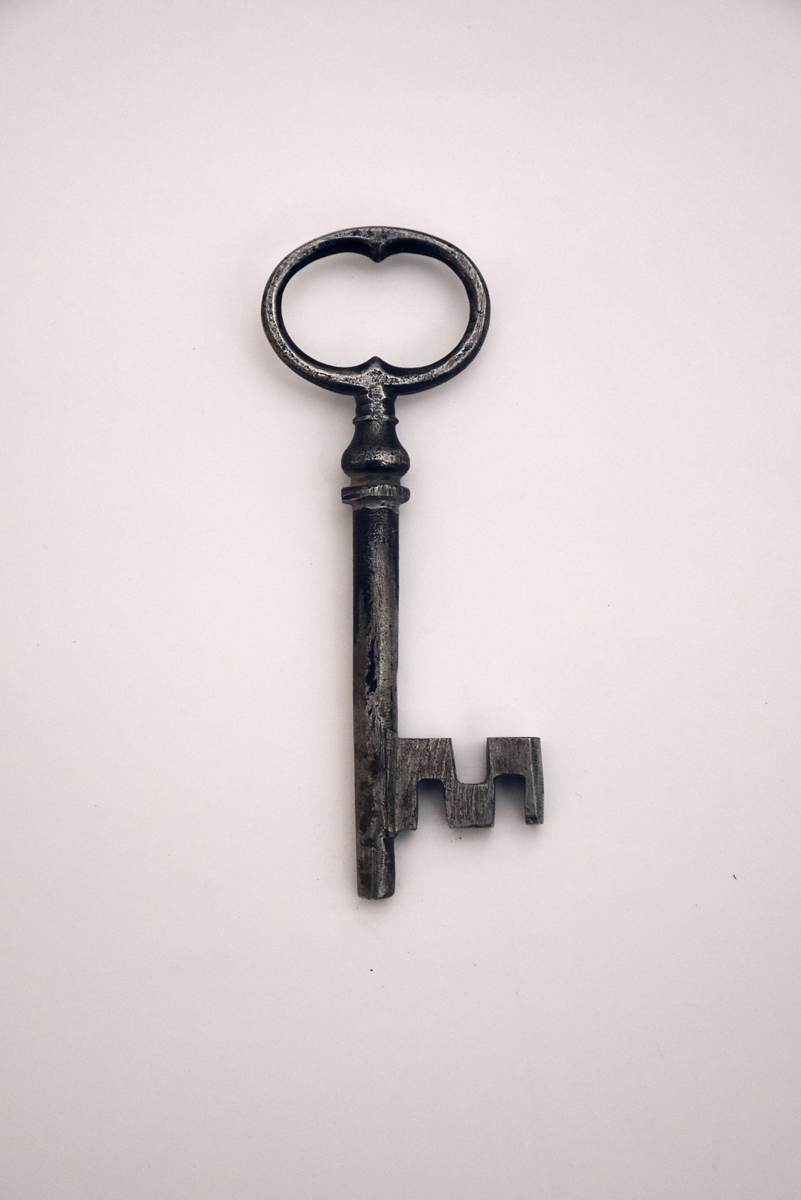
The lost camel
The Prophet Muhammad (peace be upon him) told a story that every desert traveller would understand.
A man is crossing a waterless desert on his camel, and on the camel is all his food and water. He stops to rest, and when he wakes, the camel is gone. He searches until he gives up hope. Then he lies down in the shade of a tree to wait for death.
He opens his eyes, and there is the camel, standing beside him, with everything still on its back. He seizes its halter, and in his overwhelming joy he cries out: O God, You are my servant and I am Your Lord.
He has got the words exactly the wrong way round, the Prophet (peace be upon him) explained, from sheer happiness.
Then came the point of the story. God is more pleased when His servant turns back to Him than that man was when he found his camel. (Muslim 2747; Bukhari 6309)
The story does not say God had lost the man. It is the man who wandered off. But it gives us a glimpse of how God greets someone who comes back: not with a cold record of their faults, but with a joy greater than anything a person can feel.
What each faith says
Judaism
“I will seek that which was lost, and will bring back that which was driven away, and will bind up that which was broken”
In Ezekiel 34 God speaks as a shepherd angry with careless shepherds who have let the flock scatter. He promises to do the work Himself: “I will seek that which was lost, and will bring back that which was driven away.”
Jewish tradition has a beautiful custom about lost things: hashavat aveidah, the duty to return lost property to its owner, which the Torah commands in Deuteronomy 22:1-3. Finding what someone has lost, and giving it back, is a holy act.
Christianity
“When he has found it, he carries it on his shoulders, rejoicing.”
Luke's Gospel has three parables of finding side by side: the lost sheep, the lost coin and the lost son. In each, the finder celebrates. The father in the third story sees his son “while he was still far off”, runs to him and embraces him.
For Christians these parables describe God's love searching out people who have gone astray, which they also connect with their belief about Jesus (peace be upon him) coming “to seek and to save that which was lost” (Luke 19:10).
Islam
“Did He not find you an orphan and give you shelter?”
al-Wājid does not appear in the Qur'an as a Name, though it is in the best-known list of the 99. The verb wajada, to find, is used of God in Sūrat al-Ḍuḥā, comforting the Prophet (peace be upon him) in a hard time: God had found him an orphan, wandering and poor, and had sheltered, guided and provided for him (93:6-8).
Scholars note the Name's double sense: the One who finds whatever He wills, and the One who lacks nothing at all.
Same and different
The shepherd of Ezekiel, the father in Luke and the man with the camel all rejoice at finding. All three faiths teach that God welcomes those who come back. Christians link the search especially to Jesus (peace be upon him); Jewish and Muslim teaching speak of God's welcome to the one who returns, without that link.
A moment to reflect
What is the best thing you have ever found again?
Have you ever felt lost, and what helped you find your way?
Who in your life might be waiting to be found?
Watch
Watch on YouTube ↗ · plays here on the live site; YouTube without tracking until you press play
BBC Earth Science on how sea turtles read Earth's magnetic field to find their way home.
Watch on YouTube ↗ · plays here on the live site; YouTube without tracking until you press play
Veritasium on the science of dogs' extraordinary noses, nature's best finders.
Do it together
families / schoolsLost and found
Hide a toy camel somewhere in the house or classroom with three clues. When it is found, read the lost camel hadith and the lost sheep parable and talk about how it feels to find something.
neighbours / faith groupsReturn something
Learn about hashavat aveidah. As a group, gather the lost property from your building, school or place of worship and make a real effort to return it. Share stories of things returned to you.

 Episode 1