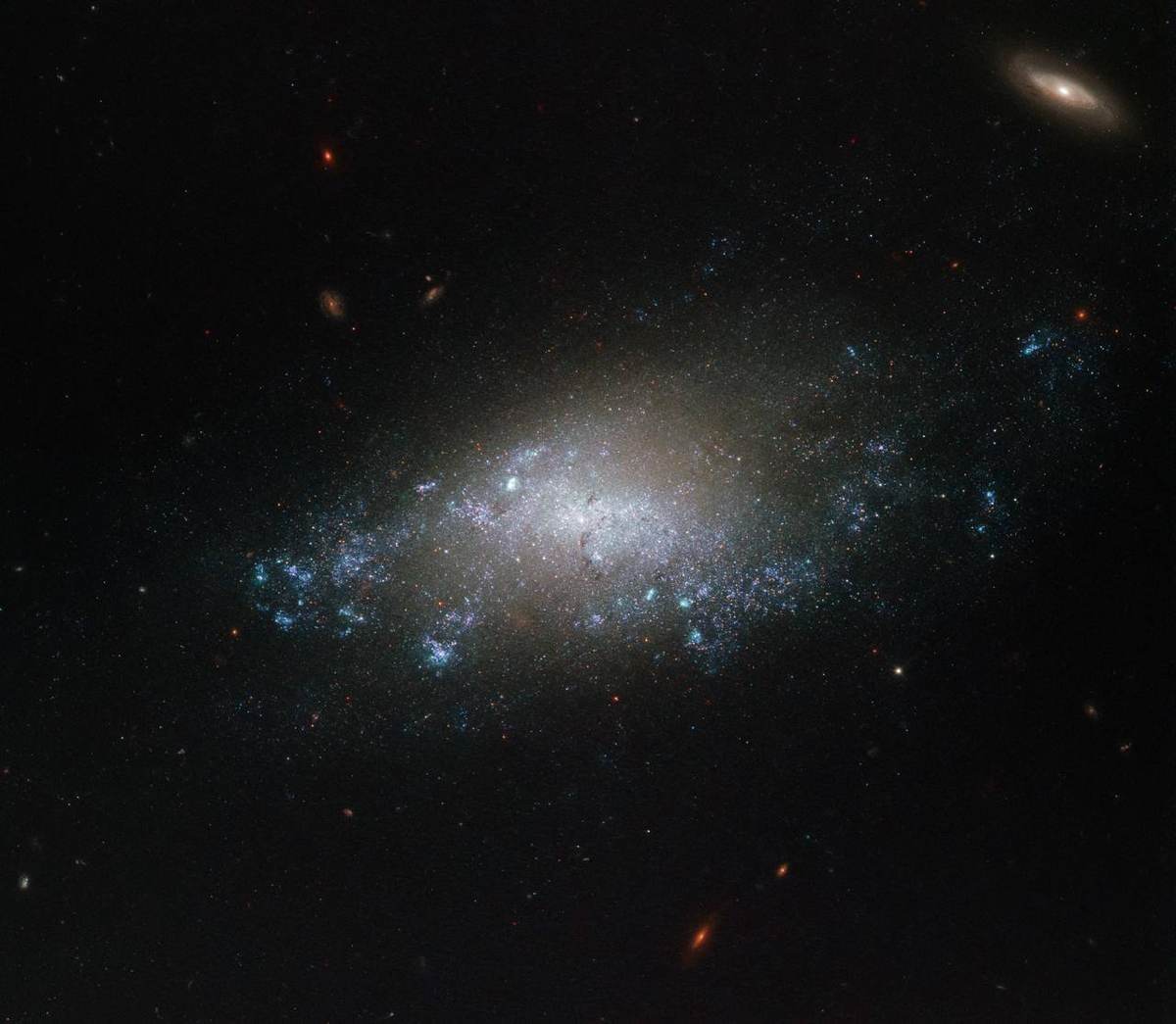
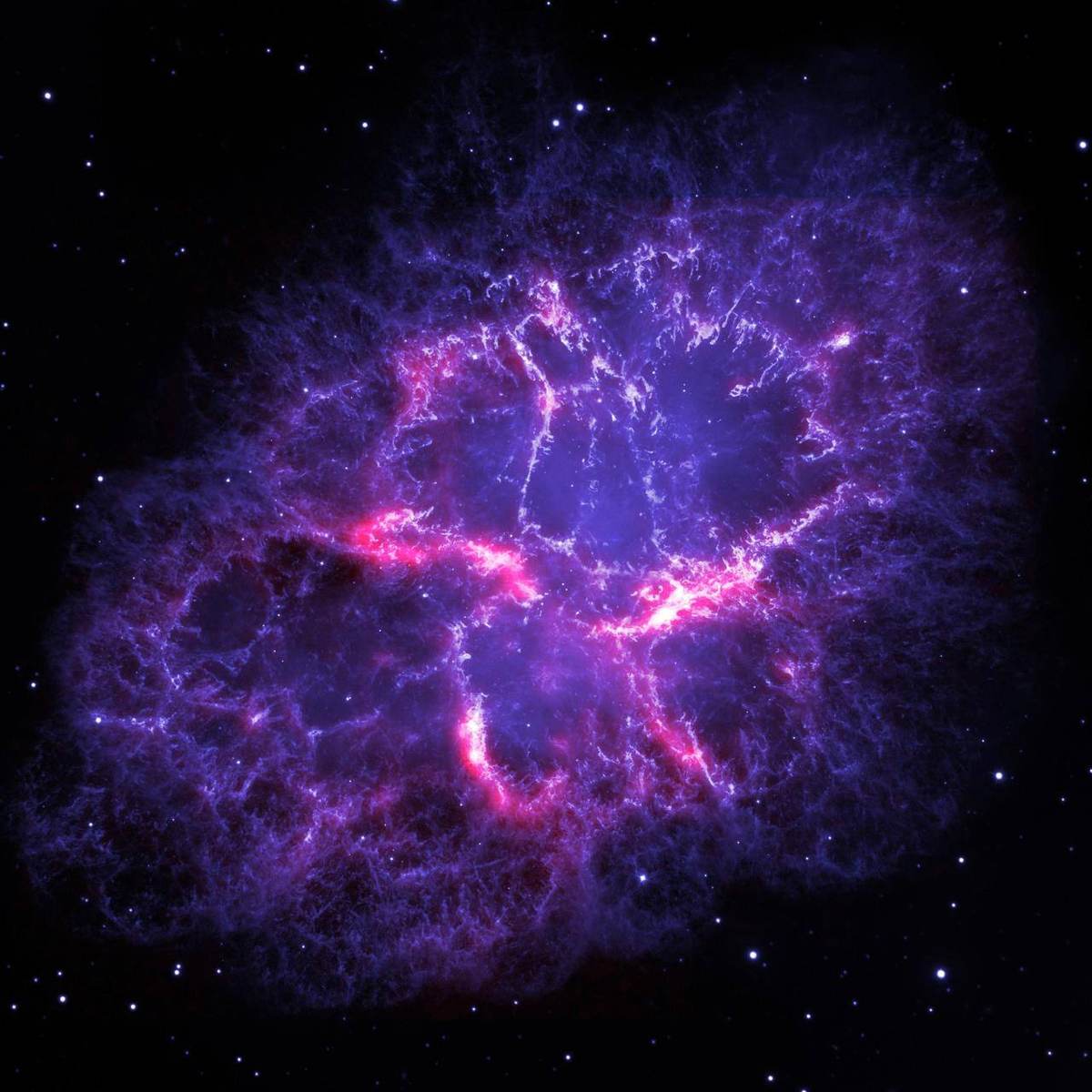
In 2022 NASA turned the pressure waves rippling through hot gas around a black hole into sound. The real 'note' is about 57 octaves below middle C, far too low for any ear. Scaled up, it sounds like a long, deep groan from 240 million light years away.
Praise is everywhere in creation, if you know how to listen. al-Ḥamīd, the Praiseworthy, is the One who deserves it whether anyone notices or not.
Start with what we know
Then take away everything it needs. What is left is not a bigger version of us. It is the Name.
Episode 1
In us
Human praise is earned, given and taken back. In 1895 the city of Bristol put up a bronze statue of the merchant Edward Colston, with a plaque calling him one of its “most virtuous and wise sons”. A century later the city had learned much more about where his wealth came from, the trade in enslaved Africans, and in June 2020 protesters pulled the statue down and rolled it into the harbour. It now lies in a museum. Whatever we think of how it came down, the lesson is plain: human praise depends on an audience, and the audience changes its mind.
Episode 2
In nature
Before sunrise in spring, a British garden can hold the songs of a dozen species at once: robin, blackbird, wren, song thrush. Birds sing to hold territory and attract mates, not to entertain us. Yet the way they learn their songs is strikingly like the way children learn to speak. A 2014 study in Science led by Andreas Pfenning found that songbirds and humans use matching sets of genes in the brain regions for vocal learning. The dawn chorus is a performance with no human audience in mind.
Episode 3
At our best
On 4 May 2022 NASA released a 'sonification' of the Perseus galaxy cluster. The Chandra X-ray Observatory had detected ripples in the hot gas around its central black hole: pressure waves, which are what sound is. Their pitch is some 57 octaves below middle C, so NASA raised it by 57 and 58 octaves to bring it into human hearing. It is a beautiful translation. But it is only ours: a sound no ear could hear until we changed it, and we should not pretend the black hole is singing for anyone.
Episode 4
The Break
Take away the audience, the earning, the changing opinion and the need to be noticed. Human praise comes and goes with who is watching. al-Ḥamīd is praiseworthy if no one is watching at all. al-Ghazālī wrote that He is praised by His own praise of Himself from eternity, and by His servants' praise for ever. The Qur'an says everything already praises Him in its own way, even if we cannot follow it: “There is nothing that does not glorify Him with praise, but you do not understand their glorifying” (Qur'an 17:44, our rendering).
From the tradition: Al-Fātiḥa opens 'al-ḥamdu lillāh'. Ghazālī: al-Ḥamīd is the One praised, by His own praise of Himself from eternity and by His servants' praise for ever. Root shared with Muḥammad and Aḥmad.
The Companion Rifāʿa ibn Rāfiʿ remembered a day when he was praying behind the Prophet Muhammad (peace be upon him). As the Prophet (peace be upon him) rose from bowing, he said the usual words, “God hears the one who praises Him.” A man in the row behind added a sentence of his own: “Our Lord, to You belongs praise, much praise, good and blessed.”
When the prayer was over, the Prophet (peace be upon him) asked who had said those words. There was a pause. Then the man owned up: it was me.
The Prophet told him: I saw more than thirty angels racing each other to be the first to write it down. (Bukhari 799)
The man had not been trying to impress anyone. He had added a few words in the middle of a prayer, in a quiet voice, and expected nobody to notice. That is why the story is loved. Human praise usually wants an audience. This praise had none, until it turned out that heaven was listening. Muslims still say his sentence, rabbanā wa laka l-ḥamd, ḥamdan kathīran ṭayyiban mubārakan fīh, in their daily prayers.
What each faith says
Judaism
“Praise ye Him, sun and moon; Praise Him, all ye stars of light.”
Praise is the backbone of Jewish prayer. The Book of Psalms is called Tehillim in Hebrew, which simply means Praises, and its last psalm ends: “Let every thing that hath breath praise the LORD. Hallelujah.” Psalm 148 calls on sun, moon and stars to join in.
Every Jewish blessing begins Barukh atah, “Blessed are You”, and a traditional Jew may say a hundred blessings in a day: on waking, eating, seeing a rainbow or hearing thunder.
Christianity
“Worthy are you, our Lord and God, the Holy One, to receive the glory, the honor, and the power, for you created all things, and because of your desire they existed, and were created!”
Christian worship is full of praise, from the angels' song at the birth of Jesus (peace be upon him), “Glory to God in the highest”, to the hymns of every church tradition. The Gloria and the Doxology are still sung in churches across Britain each Sunday.
The Book of Revelation pictures heaven itself praising God simply for being the Creator: “Worthy are you, our Lord and God... for you created all things.”
Islam
“And Moses (peace be upon him) said, “If you are ungrateful, you and everyone on earth together, God is Self-Sufficient, Praiseworthy.”
The Qur'an opens with praise: al-ḥamdu lillāhi rabbi l-ʿālamīn, “Praise belongs to God, Lord of all the worlds” (1:2). Muslims recite it at least seventeen times a day in prayer. al-Ḥamīd is often paired with al-Ghaniyy, the Self-Sufficient: “You are the ones in need of God; God is the Self-Sufficient, the Praiseworthy” (35:15).
Moses (peace be upon him) told his people: “If you and everyone on earth were ungrateful, God is still Self-Sufficient, Praiseworthy” (14:8). The names Muhammad (peace be upon him) and Aḥmad come from the same root, ḥ-m-d.
Same and different
Praise is common ground. Jews say Hallelujah, Christians sing Gloria, Muslims say al-ḥamdu lillāh, and all three see the whole of creation joining in. Christians direct their praise to God as Father, Son and Holy Spirit; Jews and Muslims to the one God without that distinction.
A moment to reflect
Whose praise matters most to you, and why?
What would you do differently if no one would ever notice?
When you hear a dawn chorus or a storm, does it feel like praise, or something else?
Watch
Watch on YouTube ↗ · plays here on the live site; YouTube without tracking until you press play
NASA's own sonification of the Perseus black hole, the pressure waves raised into human hearing.
Watch on YouTube ↗ · plays here on the live site; YouTube without tracking until you press play
Attenborough's famous lyrebird, a master of vocal learning, copying every sound around it.
Watch on YouTube ↗ · plays here on the live site; YouTube without tracking until you press play
A BBC Earth montage of British birdsong for International Dawn Chorus Day.
Do it together
families / neighboursDawn chorus walk
Meet before sunrise in a park in April or May and listen for ten minutes in silence. Use a free bird-song app to name the singers. Afterwards read Psalm 148 and Qur'an 17:44 together.
schools / faith groupsHundred thank-yous
Over a week, each person keeps a tally of things they are thankful for, aiming for a hundred, like the Jewish hundred blessings. Share a few at the end without naming who said what.
 Episode 1