In 1954 two de Havilland Comet airliners, the world's first jets, broke apart in the sky over the Mediterranean within three months. The metal was strong. It had simply been asked to be strong too many times.
Engineers at Farnborough put a whole Comet in a water tank and pressurised it again and again to find out why. al-Matīn, the Firm, names a strength that is never asked too many times.
Start with what we know
Then take away everything it needs. What is left is not a bigger version of us. It is the Name.
Episode 1
In us
The human heart is the hardest-working muscle we have. The British Heart Foundation says it beats around 100,000 times a day, which adds up to well over two billion beats in a long life, without a single day off. It is a marvel of firmness: tissue that never rests. Yet every heart wears. Valves stiffen, arteries narrow, and the muscle itself can weaken with age and strain. Bones are the same: runners and soldiers who repeat the same load day after day can develop tiny 'stress fractures' even though no single step was too much. What is firm in us stays firm only so long.
Episode 2
In nature
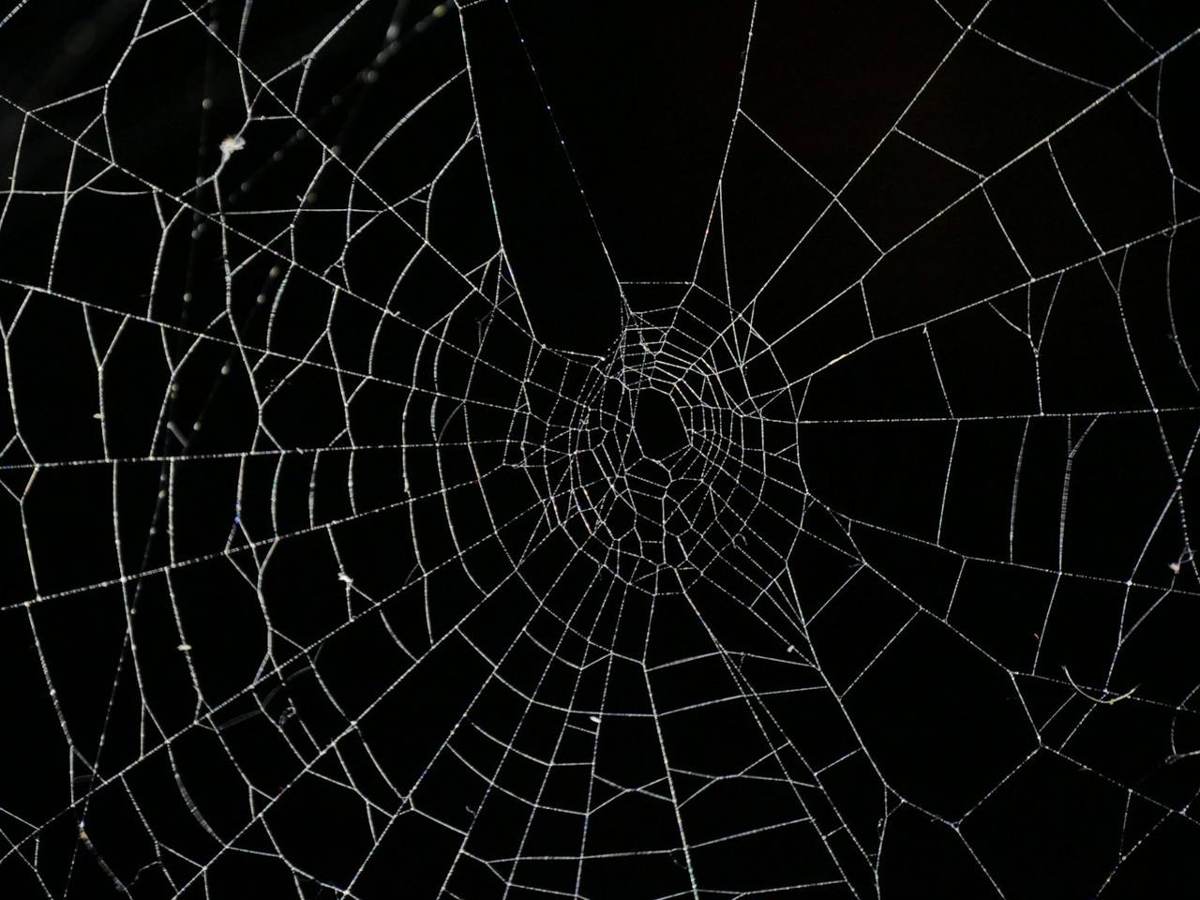
In 2010 scientists described the silk of Darwin's bark spider in Madagascar as the toughest biological material ever measured, about ten times tougher than Kevlar. The spider uses it to string webs across whole rivers, with anchor lines up to 25 metres long. And yet the Qur'an chooses the spider's house as its picture of weakness: “the frailest of houses is the spider's house, if only they knew” (29:41). A thread can be astonishingly tough and a home still fail to shelter. Strength of material is not the same thing as safety.
Episode 3
At our best
Graphene, a sheet of carbon one atom thick, was measured at Columbia University in 2008 as the strongest material ever tested. Professor James Hone said it would take an elephant balanced on a pencil to break through a sheet as thin as cling film. But that was a tiny, perfect flake. Real materials have flaws, and repeated stress finds them. In the Comet inquiry, a test fuselage at Farnborough burst after 3,057 pressure cycles, from fatigue cracks that began at small holes. Everything strong we make is strong until the next time.
Episode 4
The Break
Take away wear, flaws, repetition, age, and the slow creep of cracks. Every firm thing we know is firm until a number: the 3,057th cycle, the two-billionth heartbeat. al-Matīn has no number. al-Ghazālī said that al-Qawiyy names complete power and al-Matīn its intensity: strength that does not weaken under any load. The Qur'an puts the two together: “God is the Provider, the Lord of Strength, the Firm” (Qur'an 51:58, our rendering).
From the tradition: Ghazālī: al-Matīn is intensity (shidda) of strength, as al-Qawiyy is complete power. Muslim 'Allah does not grow weary, but you will'.
One day the Prophet Muhammad (peace be upon him) came home and found a woman sitting with his wife ʿĀʾisha. He asked who she was. ʿĀʾisha told him her name, al-Ḥawlāʾ, and added with admiration that she was known for praying all night and never sleeping.
The Prophet's reply surprised her. He did not praise the woman's endurance. He said: stop. Take on only the good deeds you can keep up. By God, God does not grow weary, but you will grow weary. And the deed God loves most is the one done steadily, even if it is small. (Bukhari 43; Muslim 785)
The story turns the Name round. Firmness that never tires belongs to God alone. Human beings are not meant to imitate it by burning themselves out; they are meant to be steady, like a heartbeat rather than a sprint. A little, done every day, holds better than a great deal done until it breaks. Muslims often quote the hadith to anyone, including themselves, who is trying to do too much at once.
What each faith says
Judaism
“the everlasting God, the LORD, The Creator of the ends of the earth, Fainteth not, neither is weary?”
The most common Jewish picture of God's firmness is a rock. Moses (peace be upon him) begins his great song in Deuteronomy with it: “The Rock, His work is perfect.” In Hebrew, tzur, rock, became so closely linked with God that Tzur Yisrael, Rock of Israel, is still a name used in prayer.
Isaiah adds the thought that God does not tire: the Creator “fainteth not, neither is weary”, and He gives strength to those who are worn out.
Christianity
“Everyone therefore who hears these words of mine, and does them, I will liken him to a wise man, who built his house on a rock. The rain came down, the floods came, and the winds blew, and beat on that house; and it didn’t fall, for it was founded on the rock.”
Jesus (peace be upon him) told a short parable that sounds very like the Qur'an's spider. Two men build houses. One builds on sand, and the storm brings it down. The other builds on rock, and it stands.
For Christians the rock is God and the teaching of Jesus (peace be upon him). Hymns like “Rock of Ages” carry the same image: a firmness outside ourselves, which does not wear away.
Islam
“It is God who is the Provider, the Lord of Strength, the Firm.”
al-Matīn occurs once in the Qur'an, in 51:58, alongside al-Qawiyy. The Throne Verse makes the same point in different words: the care of the heavens and the earth “does not tire Him” (2:255).
The Qur'an's spider verse warns against leaning on anything other than God for ultimate safety, however strong it looks. The servant's share of this Name, scholars say, is steadiness: to keep going in good, a little at a time, and to rely on the One who does not weaken.
Same and different
The Rock of Deuteronomy, the house on the rock in Matthew, and the spider's house in the Qur'an all ask the same question: what are you building on? All three traditions say God does not tire. They differ in who the rock is said to be: for Christians it is also Christ and his teaching; for Jews and Muslims it is God alone.
A moment to reflect
What in your life feels strong but might be wearing out?
Is it better to do a lot of good once, or a little good every day? Why?
What makes a home safe, beyond the strength of its walls?
Watch
Watch on YouTube ↗ · plays here on the live site; YouTube without tracking until you press play
BBC footage of Darwin's bark spider stringing its giant web across a river.
Watch on YouTube ↗ · plays here on the live site; YouTube without tracking until you press play
Why graphene, the strongest material ever measured, is still hard to use in the real world.
Do it together
families / schoolsThe paperclip test
With an adult, bend a paperclip back and forth and count how many bends it takes to snap. Compare results. Talk about why it breaks even though no single bend was too much, and read Bukhari 43 together.
faith groups / schoolsSand and rock
Build two small towers, one on a tray of sand and one on a brick, and pour water around them. Read Matthew 7:24-25, Qur'an 29:41 and Deuteronomy 32:4 and discuss what each tradition means by a firm foundation.
 Episode 1