Five times a day, at the lowest point of their prayer, with forehead, nose, hands, knees and toes on the floor, Muslims say: Subḥāna rabbiya l-aʿlā, “Glory to my Lord, the Most High.” It is the highest Name, said from the lowest place the body can go.
al-ʿAliyy is the Most High. It is easy to picture this as ‘up there’, above the clouds. But Muslim scholars warned against that, and this episode follows the highest places we know until the word ‘up’ stops meaning anything at all.
Start with what we know
Then take away everything it needs. What is left is not a bigger version of us. It is the Name.
Episode 1
In us
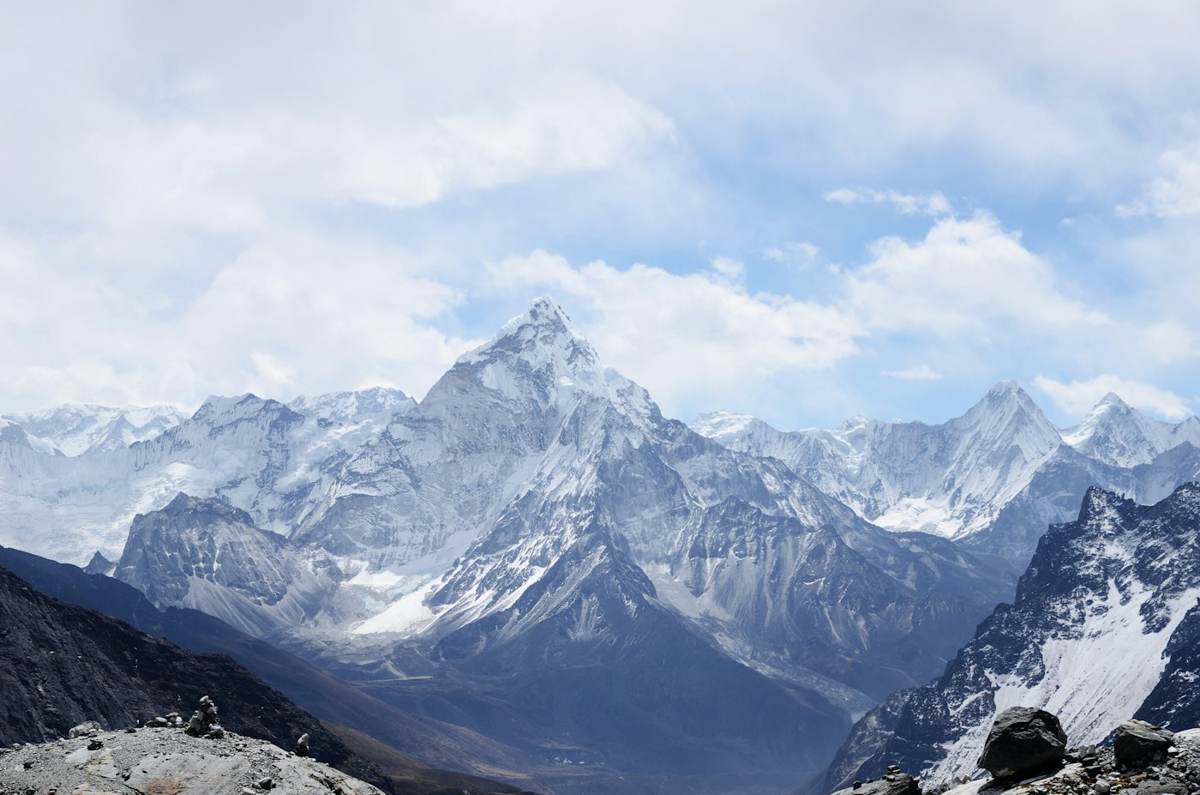
At 11.30 in the morning on 29 May 1953, Edmund Hillary and Tenzing Norgay stood on the summit of Everest, the highest point on Earth. They stayed about fifteen minutes. Tenzing, a Buddhist, buried a few sweets and biscuits in the snow as an offering; Hillary left a small crucifix that the expedition leader, John Hunt, had given him (Royal Geographical Society). Even at the top of the world, both men reached for something higher. And they could only stay a quarter of an hour, breathing bottled oxygen, before they had to come down.
Episode 2
In nature
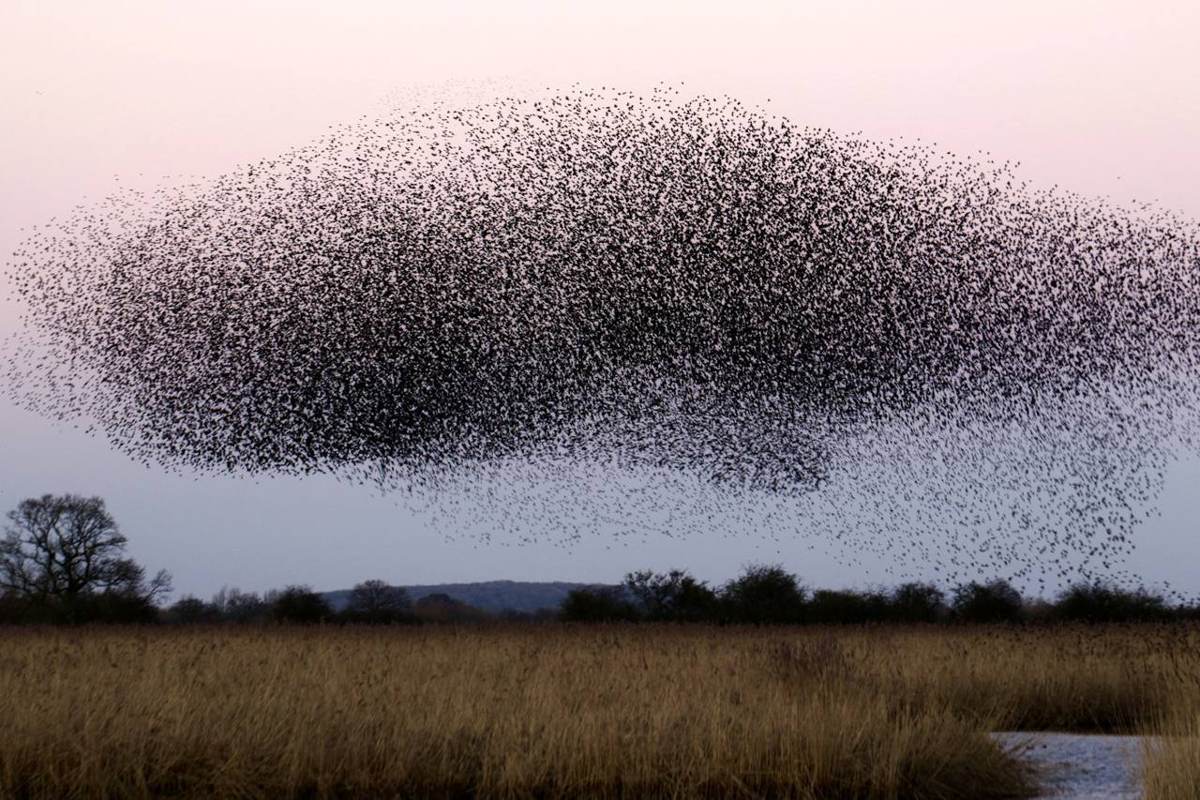
Bar-headed geese migrate between India and Central Asia straight across the Himalaya, one of the highest migrations of any bird. Satellite tags show they can climb more than 6,000 metres, with one bird recorded at over 7,000, in air with less than half the oxygen at sea level (Bishop and others, Science, 2015). But the geese do not soar effortlessly above the peaks. They follow the shape of the ground, climbing and dropping again like a roller coaster, and often fly at night when the air is colder and denser. Every height in nature is reached with effort and lost again.
Episode 3
At our best
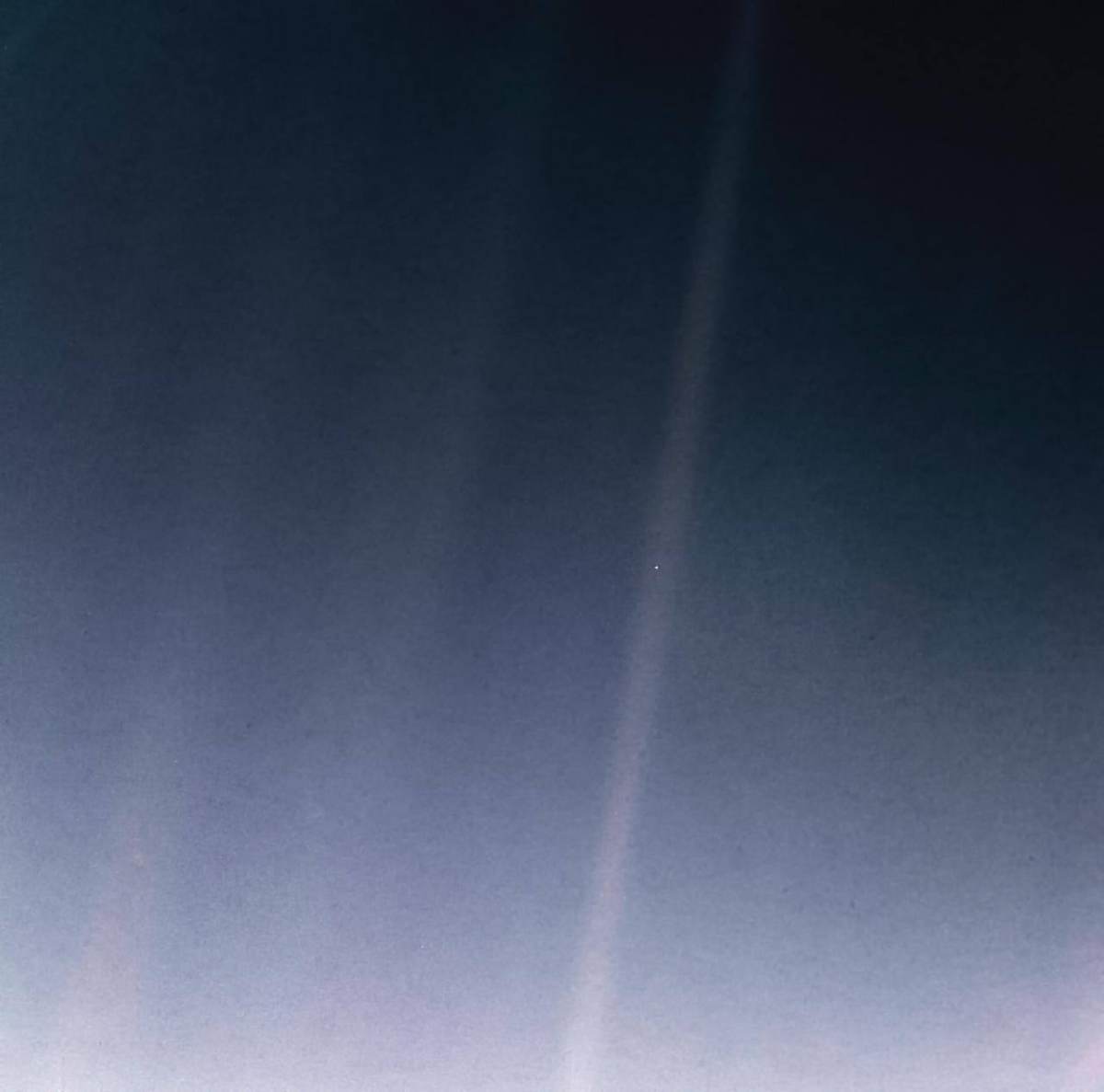
Voyager 1, launched in 1977, is the farthest object human beings have ever made: more than 25 billion kilometres from Earth, outside the bubble of the Sun's wind. In November 2026 it is expected to become the first spacecraft a full light-day away (NASA JPL). It is the highest we have ever reached. Yet out there, ‘high’ means nothing. There is no up or down in space, only further. The word that worked on a mountain falls apart. Our greatest height turns out to be distance, and distance is still a place.
Episode 4
The Break
Take away the oxygen tanks, the climb and fall of the geese, and then take away ‘up’ itself, because past the atmosphere there is no up. al-ʿAliyy is not the highest place; He is high above place, rank and comparison, and that is why He can be reached from the floor. “Glorify the name of your Lord, the Most High” (Qur'an 87:1, our rendering).
From the tradition: School difference: Atharīs affirm His highness above the Throne 'without how'; Ashʿarīs and Māturīdīs read highness of rank and power, God not in a direction; Twelvers: beyond place. Isaiah 57:15 'I dwell on high, in holiness; Yet with the contrite and the lowly'
On screen
In Journey the summit is the goal. al-ʿAliyy is not the top of the mountain; He is also with the one still at the bottom.
Jābir ibn ʿAbdullāh, a companion of the Prophet Muhammad (peace be upon him), remembered a small habit from their journeys together. “When we went up a hill, we would say Allāhu akbar, God is greater. And when we went down, we would say Subḥān Allāh, glory be to God” (Bukhari 2993).
Climbing, they reminded themselves that God is greater than any height they reached. Going down into a valley, they praised Him as above every low and every lack.
When the verse “Glorify the name of your Lord, the Most High” was revealed, the Prophet (peace be upon him) told his followers to say it in prostration (Abū Dāwūd 869). And he said: “The nearest a servant comes to his Lord is when he is prostrating, so make many prayers then” (Muslim 482).
So the Most High is praised from the lowest point. Muslim teachers found a quiet lesson in that: you do not reach al-ʿAliyy by climbing. You reach Him by bowing down.
What each faith says
Judaism
“And he blessed him, and said: 'Blessed be Abram of God Most High, Maker of heaven and earth”
In Genesis, the priest-king Melchizedek blesses Abram (peace be upon him) in the name of El Elyon, ‘God Most High, Maker of heaven and earth’. The Hebrew elyon and the Arabic ʿaliyy may come from the same root, though scholars are not certain. The Psalms praise God as most high above all the earth.
Isaiah also says that the High and Lofty One dwells with the humble and contrite: the God most high is not distant from the lowly.
Christianity
“However, the Most High doesn't dwell in temples made with hands, as the prophet says”
In Luke's Gospel, the angel tells Mary (peace be upon her) that her son will be called “Son of the Most High”. Christians use the title in prayer and song.
Stephen, the first Christian martyr, reminded his hearers that the Most High is not contained in buildings. For Christians, as for Jews and Muslims, ‘highness’ means God is beyond every place, not located far away.
Islam
“That is because God is the Truth, and what they call on besides Him is falsehood, and because God is the Most High, the Great.”
al-ʿAliyy appears eight times in the Qur'an, including at the end of Āyat al-Kursī: “He is the Most High, the Magnificent” (2:255). Muslim schools of theology understand His highness in different ways. Atharī scholars affirm that God is above His Throne, as the Qur'an says, without asking how. Ashʿarī and Māturīdī scholars read it as highness of rank, power and perfection, with God not in any direction. Shīʿī theologians hold that He is beyond all place.
All of them agree on one thing: God is not a body in the sky, and nothing in creation is like Him (42:11).
Same and different
Jews call God El Elyon, Christians the Most High, Muslims al-ʿAliyy, and all three insist that this means God is beyond every place, not merely far above it. All three pair His highness with closeness to the humble: Isaiah's lofty One who dwells with the contrite, the Most High overshadowing Mary (peace be upon her), the prostration in which a Muslim is nearest to God. Christians differ in believing the Most High became incarnate in Christ; Muslim schools differ among themselves on how to speak of His being above the Throne.
A moment to reflect
What is the highest place you have ever stood? What did you feel there?
Why do you think the faiths connect God's highness with human lowliness?
Where do you feel closest to God, if you do: up high or bowed down?
Watch
Watch on YouTube ↗ · plays here on the live site; YouTube without tracking until you press play
The Guardian's archive film of Hillary and Tenzing climbing Everest in 1953: the ‘In us’ rung.
Watch on YouTube ↗ · plays here on the live site; YouTube without tracking until you press play
NASA JPL: Voyager's sounds of interstellar space: the ‘At our best’ rung.
Do it together
families / schoolsUp and down
On your next walk with a hill, try Jābir's habit: say ‘God is greater’ (or simply ‘wow’) going up, and ‘glory be’ (or ‘thank you’) going down. Talk afterwards about what changed.
faith groupsMost High, three ways
Read Genesis 14:18-20, Luke 1:30-35 and Qur'an 87:1-5 together. Ask each tradition's members to explain what ‘Most High’ means to them, and what it does not mean.
 Episode 1