In 1942, a young Jewish prisoner in a Nazi labour camp was taken to the bedside of a dying SS soldier. The soldier confessed to taking part in the murder of Jewish families and begged him for forgiveness. The prisoner, Simon Wiesenthal, listened, and then walked out without a word.
For the rest of his life, Wiesenthal asked whether he had done right. In his book The Sunflower, he put the question to dozens of thinkers from many faiths. Their answers disagreed. Some wrongs seem too great for any human being to forgive. al-Ghafūr is the All-Forgiving: the One whose forgiveness is vast enough to cover what we cannot.
Start with what we know
Then take away everything it needs. What is left is not a bigger version of us. It is the Name.
Episode 1
In us
Wiesenthal's own answer, many argued, was that he could not forgive on behalf of the dead: only the people who were wronged can forgive what was done to them. Human forgiveness is like that. We can forgive what was done to us, and only if we are able. Some people find the strength to forgive astonishing harm; others, with equal goodness, cannot. And even when we forgive, we cannot undo what happened, or wipe the record clean for anyone else. Our forgiveness is real, and it is narrow, personal and bounded.
Episode 2
In nature
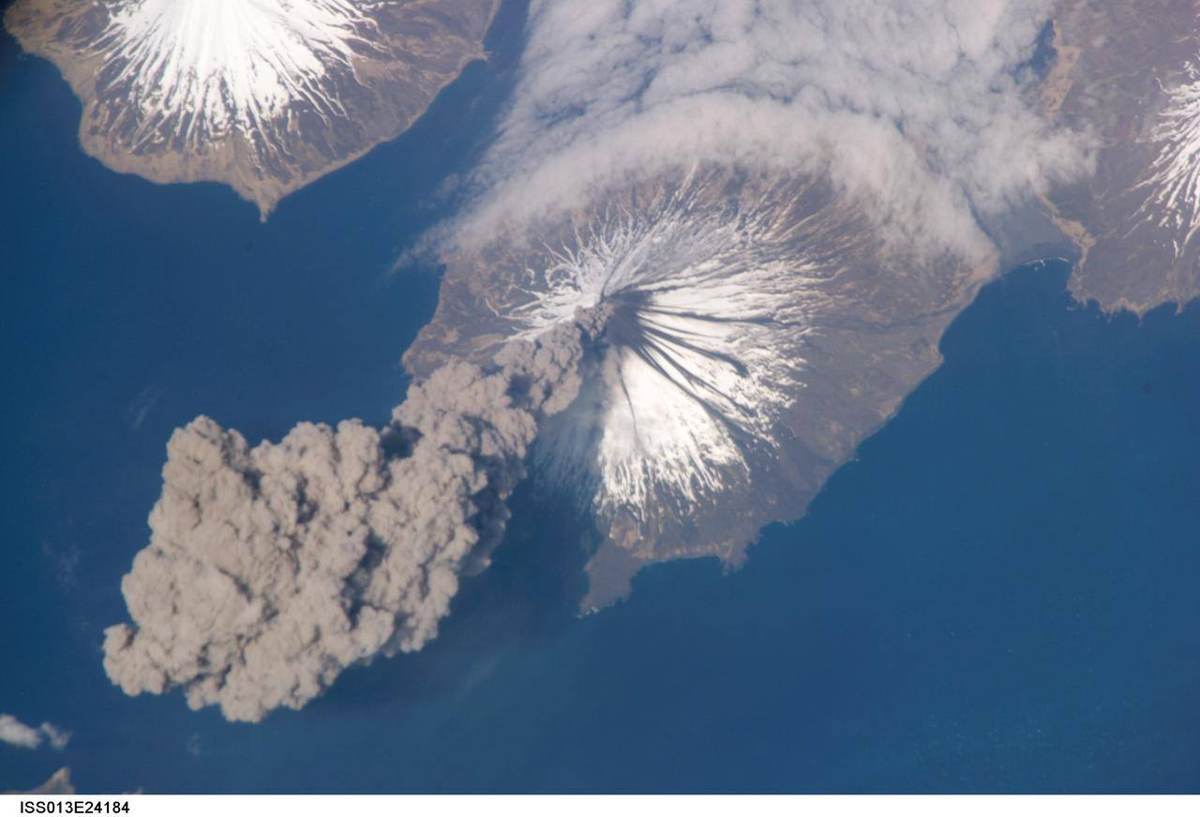
On 18 May 1980, Mount St Helens in Washington State erupted, flattening about 600 square kilometres of forest. It looked dead. Satellite images from NASA's Landsat programme have since tracked life coming back: first a few plants surviving in pockets of snow, then fireweed and lupins, then young trees (NASA Earth Observatory). Forty years on, much of the slope is green again. Nature covers its wounds. But it takes decades, the shape of the mountain is changed for ever, and the scar of the blast is still visible from space.
Episode 3
At our best
Britain's Rehabilitation of Offenders Act 1974 says that after a set time without reoffending, many convictions become ‘spent’: people no longer have to declare them for most jobs, insurance or housing. In 2023 the waiting times were shortened (GOV.UK). It is a law built on the belief that people can change and deserve a fresh start. But it has limits. Some sentences never become spent, records still exist, and certain jobs can still see them. Even our most forgiving laws remember.
Episode 4
The Break
Take away the limit of forgiving only our own hurts, the decades of regrowth, the scar, the record that still exists. Every forgiveness we know is partial and remembers. al-Ghafūr is not a larger version of us; His forgiveness is vast enough to cover what no one else can, and is offered to everyone who turns back. The Qur'an pairs it with love: “He is the All-Forgiving, the Loving” (Qur'an 85:14, our rendering).
From the tradition: Classical: Ghafūr = vastness of forgiveness, Ghaffār = its repetition. Psalm 103:12 'As east is far from west, so far have our sins been removed from us'
On screen
Javert could not live with being forgiven. al-Ghafūr's forgiveness is offered to people who can't believe it either (39:53).
The Prophet Muhammad (peace be upon him) once told his companions a story to show how God feels when someone turns back to Him.
Imagine, he said, a man travelling through a waterless desert on his camel, which carries all his food and water. He stops to rest under a tree and falls asleep. When he wakes, the camel is gone. He searches and searches, until heat and thirst overcome him. He gives up hope, goes back to the tree and lies down to die.
Then he opens his eyes, and the camel is standing beside him, with all his food and water still on its back. He grabs its reins and, out of sheer joy, cries out: “O God, You are my servant, and I am Your Lord.” He has got the words the wrong way round, the Prophet (peace be upon him) said, from the strength of his happiness.
“God is more delighted with the repentance of His servant,” the Prophet (peace be upon him) said, “than that man is when he finds his camel” (Muslim 2747).
The story pictures forgiveness not as a grudging pardon, but as joy. The One who forgives is glad to.
What each faith says
Judaism
“As far as the east is from the west, so far hath He removed our transgressions from us.”
Psalm 103 describes God removing our transgressions as far as the east is from the west: a distance that can never be crossed. Every year, on the afternoon of Rosh Hashanah, many Jews go to a river or the sea for Tashlikh, symbolically casting their sins into the water, recalling Micah's words that God will cast all sins into the depths of the sea (Micah 7:19).
Jewish teaching is clear, though, that sins against other people need their forgiveness too. God forgives what is done against Him; the rest must be put right.
Christianity
“And be kind to one another, tender hearted, forgiving each other, just as God also in Christ forgave you.”
Christians believe God's forgiveness is offered to all through Christ, and that those who are forgiven must forgive others. The Lord's Prayer links the two directly.
The letter to the Ephesians puts it simply: forgive one another, just as God forgave you. Many churches hold services of reconciliation, and the sacrament of confession is a regular part of Catholic and Orthodox life.
Islam
“Tell My servants that I am the All-Forgiving, the Especially Merciful.”
al-Ghafūr is one of the most frequent Names in the Qur'an, appearing about ninety times, very often paired with ar-Raḥīm. Classical scholars distinguished it from al-Ghaffār: al-Ghaffār stresses that God forgives again and again; al-Ghafūr stresses how vast and complete His forgiveness is.
Islam also teaches that wrongs done to other people must be put right with them, through apology and restoring what was taken, and that God forgives what is between the servant and Him.
Same and different
All three faiths teach that God's forgiveness is greater than any human forgiveness, and all three teach that wrongs against other people must be put right with them. Wiesenthal's question, whether one can forgive on behalf of others, gets a similar answer in Jewish, Christian and Muslim ethics: generally not. They differ in how God's forgiveness is received: through teshuvah and Yom Kippur, through Christ, or through direct repentance to God. They agree that no one is beyond it.
A moment to reflect
Is there anything you think is unforgivable? Why?
Can you forgive someone on behalf of another person?
What would you do differently if you truly believed you were forgiven?
Watch
Watch on YouTube ↗ · plays here on the live site; YouTube without tracking until you press play
NASA Goddard: Landsat tracks Mount St Helens' recovery: the ‘In nature’ rung.
Watch on YouTube ↗ · plays here on the live site; YouTube without tracking until you press play
USGS time-lapse of Mount St Helens' lava dome regrowing, 2004-2008.
Do it together
faith groups / neighboursTashlikh by the river
Near Rosh Hashanah, or any time of new beginnings, walk together to a river, canal or pond. Each person silently names something they want to let go of and throws a small piece of bread or a leaf into the water. Read Psalm 103:12 and Qur'an 15:49.
Tell the story of Simon Wiesenthal and the dying soldier. Without rushing to an answer, discuss: was he right? Can we forgive for others? What do the three faiths say?
 Episode 1