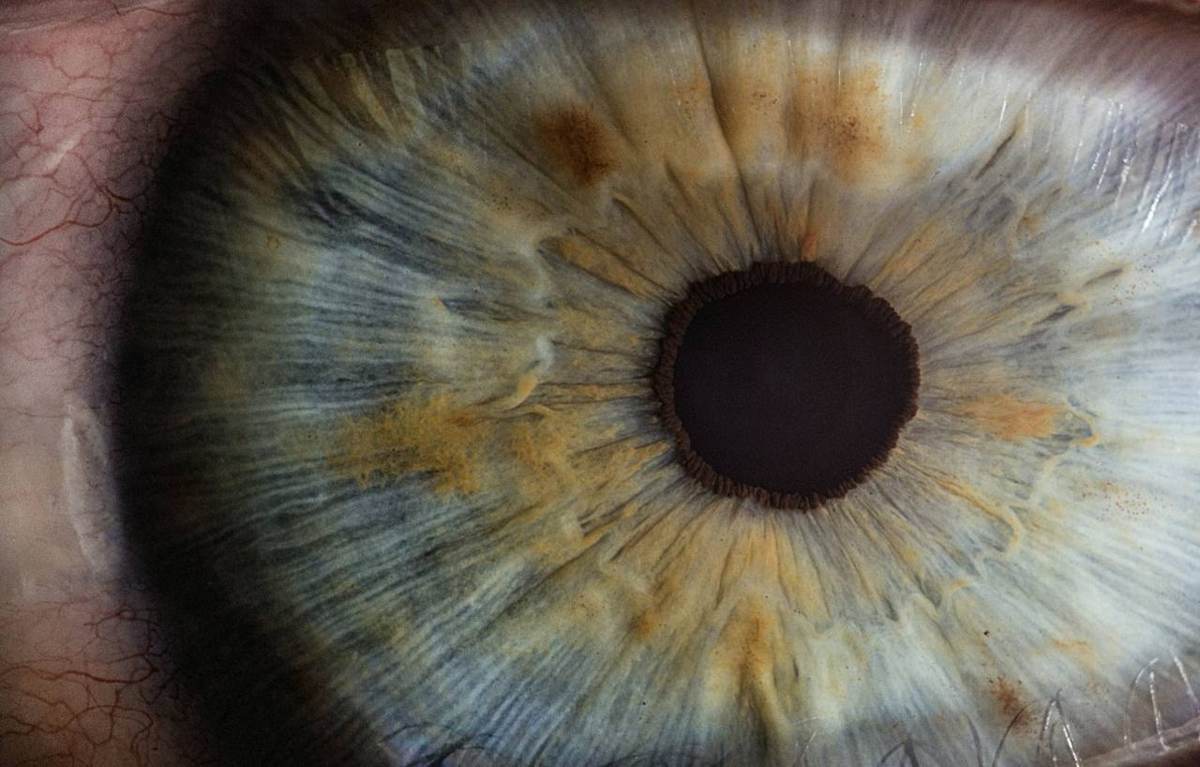
Press your fingertip onto a window. The swirls you leave were drawn on you before you were born, between about the tenth and sixteenth week in the womb. No two people share them, not even identical twins who began as a single cell. In 2023, scientists in Edinburgh finally showed how the pattern forms: waves of chemical signals spreading across the skin, like ripples meeting in a pond.
al-Muṣawwir is the Fashioner, the One who gives each thing its form. It is the third of the three creating Names: after the planning and the bringing into being comes the shaping. This episode looks at the finest shaping we know, and what it still needs.
Start with what we know
Then take away everything it needs. What is left is not a bigger version of us. It is the Name.
Episode 1
In us
In 1501 a 26-year-old Michelangelo was handed a block of marble more than five metres tall that had lain in a Florence workshop yard for decades. Two sculptors before him had started on it and given up; the stone was narrow and flawed. Over three years he freed from it the figure of David (peace be upon him), 5.17 metres high, now in the Galleria dell'Accademia. It is one of the most perfect forms a human hand has made. But he had to work with a block someone else had cut, round faults he did not choose, with chisels, drills and years of time. Our shaping is always imposed from the outside, on material that resists.
Episode 2
In nature
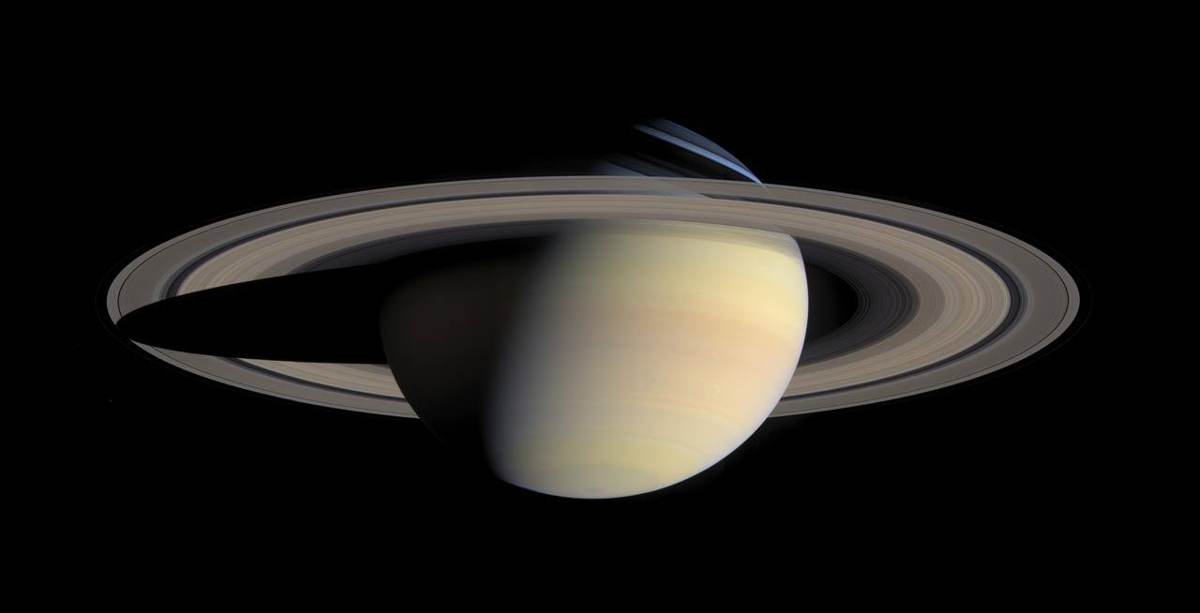
At Saturn's north pole sits a six-sided shape about 30,000 kilometres across, wide enough to hold two Earths, made of a jet stream of cloud racing round the planet. Voyager first saw it in 1981, and NASA's Cassini spacecraft watched it for years; it even changed colour from blue to gold as Saturn's seasons turned (NASA). Nobody carved it. Physics fashions it, from the spin of the planet and the flow of gas. But it is one shape, made by forces that cannot choose another, and it has no idea what it is.
Episode 3
At our best
In 2019 a team at Tel Aviv University printed a small heart, complete with chambers and blood vessels, using a patient's own cells mixed into a living ink (Noor and others, Advanced Science, 2019). It was a world first in fashioning living form. But it was about the size of a rabbit's heart. Its cells could contract, but it could not yet pump. The printer needed cells taken from a living body, a digital model to copy and a laboratory to hold it. We can print a shape; we cannot yet give it a life of its own.
Episode 4
The Break
Take away the marble someone else cut, the chisel, the jet stream that cannot choose, the model to copy, the borrowed cells. Every shaper we know shapes from outside, on something given. al-Muṣawwir is not a finer sculptor; He gives each thing its form from within, and gives every face its own. “He created the heavens and the earth with truth, and He shaped you, and made your shapes beautiful, and to Him is the return” (Qur'an 64:3, our rendering).
From the tradition: al-Ghazālī: taṣwīr is the finishing, the giving of form: He arranges the forms of what He brings into being in the best order (the decorator, in his architect analogy). Isaiah 64:7 'We are the clay, and You are the Potter'
On screen
Geppetto can carve the shape; he has to wish for the life. al-Muṣawwir gives the form and the one inside it.
Among the Bedouin who came to Medina to trade was a man called Zāhir ibn Ḥarām. He was not handsome, and he was poor. He used to bring small gifts from the desert for the Prophet Muhammad (peace be upon him), and the Prophet (peace be upon him) would send him home with supplies for the journey. The Prophet said: “Zāhir is our desert, and we are his town.”
One day Zāhir was standing in the market selling his goods. The Prophet came up quietly behind him and put his arms around him, holding him so he could not see who it was. Zāhir struggled and cried, “Let me go. Who is this?” Then he turned, saw who it was, and leaned back happily against the Prophet (peace be upon him)'s chest.
The Prophet began to call out, smiling: “Who will buy this servant?” Zāhir laughed: “Messenger of God, you will find me poor goods.” The Prophet replied: “But in God's sight, you are not poor goods.”
Another saying of the Prophet (peace be upon him) explains the story: “God does not look at your forms or your wealth, but He looks at your hearts and your deeds” (Muslim 2564). The One who fashioned every face does not rank them.
What each faith says
Judaism
“But now, O LORD, Thou art our Father; we are the clay, and Thou our potter, and we all are the work of Thy hand.”
Genesis describes God forming the first human from the dust, using the verb yatzar, the word for a potter shaping clay. The prophets return to the image: Israel is clay in the potter's hand.
The Mishnah draws a striking lesson. When a king mints coins from one die, they all come out alike. But God stamped every human being with the die of the first man, and not one is like another. So, it says, each person must be able to say: “For my sake the world was created” (Sanhedrin 4:5).
Christianity
“For we are his workmanship, created in Christ Jesus (peace be upon him) for good works, which God prepared before that we would walk in them.”
Christians share the Hebrew Bible's image of God the potter, and many pray Psalm 139, which praises God for knitting each person together in the womb.
The New Testament adds that God goes on shaping people after birth: believers are His workmanship, being formed for good works and, Paul says, being transformed into the likeness of Christ.
Islam
“It is He who shapes you in the wombs as He wills. There is no god but Him, the Almighty, the Wise.”
al-Muṣawwir closes the trio of creating Names in Qur'an 59:24. al-Ghazālī, using his picture of a builder, said it is the finishing: arranging the forms of what is brought into being in the best order. The Qur'an says God shapes people “in the wombs as He wills” (3:6) and asks the human being what has made them heedless of the Lord who “proportioned you and balanced you, and assembled you in whatever form He willed” (82:7-8).
Because this Name is about giving form, it is often quoted in Muslim debates about making pictures of living beings. Scholars have held a range of views on that question. This site follows one clear rule of its own: it never pictures God or any prophet.
Same and different
All three faiths use the image of a maker shaping clay, and all three see every human face as deliberately made. The Mishnah's coin and the Qur'an's ‘as He wills’ say the same thing about our differences: they are designed, not accidental. Christianity adds the belief that God goes on shaping believers into the likeness of Christ. The faiths differ on images: Jewish and Muslim traditions are cautious about depicting living things in worship, while many Christian traditions use icons and statues.
A moment to reflect
What do you think your face or your fingerprints say about you, if anything?
Have you ever judged someone by how they look, and been wrong?
If you are being shaped still, what do you hope is being formed in you?
Watch
Watch on YouTube ↗ · plays here on the live site; YouTube without tracking until you press play
NASA on Saturn's six-sided jet stream: the ‘In nature’ rung.
Watch on YouTube ↗ · plays here on the live site; YouTube without tracking until you press play
The Smithsonian Channel on where fingerprints come from: the hook of this episode.
Watch on YouTube ↗ · plays here on the live site; YouTube without tracking until you press play
The Tel Aviv team's 3D-printed heart: the ‘At our best’ rung.
Do it together
schools / familiesFingerprint gallery
Using an ink pad or a soft pencil rubbed on paper and some sticky tape, collect everyone's thumbprint. Look with a magnifying glass for loops, whorls and arches. Read the Mishnah's coin saying and Qur'an 3:6 and talk about why no two are alike.
faith groups / neighboursClay together
Run a simple pottery or air-dry clay evening. While hands are busy, read Isaiah 64:7 and Qur'an 64:3 and ask: what is it like to shape something, and to be shaped?
 Episode 1