In 1948 a Cambridge psychologist, Norman Mackworth, sat RAF radar operators in front of a clock with one hand that jumped forward. Every so often it jumped twice. Their job was to spot the double jump. Within half an hour, they were already missing far more of them. They were not lazy. They were human. No one can watch perfectly for long.
al-Muhaymin is the Ever-Watchful Guardian: the One who watches over everything, all the time, and keeps it safe. This episode follows the best watchers on Earth and beyond, to see where their watching stops.
Start with what we know
Then take away everything it needs. What is left is not a bigger version of us. It is the Name.
Episode 1
In us
Mackworth's ‘clock test’ measured something every night nurse, lifeguard and air-traffic controller knows. In his experiments for the RAF, operators missed noticeably more signals after only 30 minutes on watch, and performance kept slipping across a two-hour shift (Mackworth, 1948). Psychologists call it the vigilance decrement. That is why hospital wards change shifts, lifeguards rotate every hour and pilots share the flying. Our most careful watching still drifts, blinks and needs to hand over. And in the end, every watcher has to sleep.
Episode 2
In nature
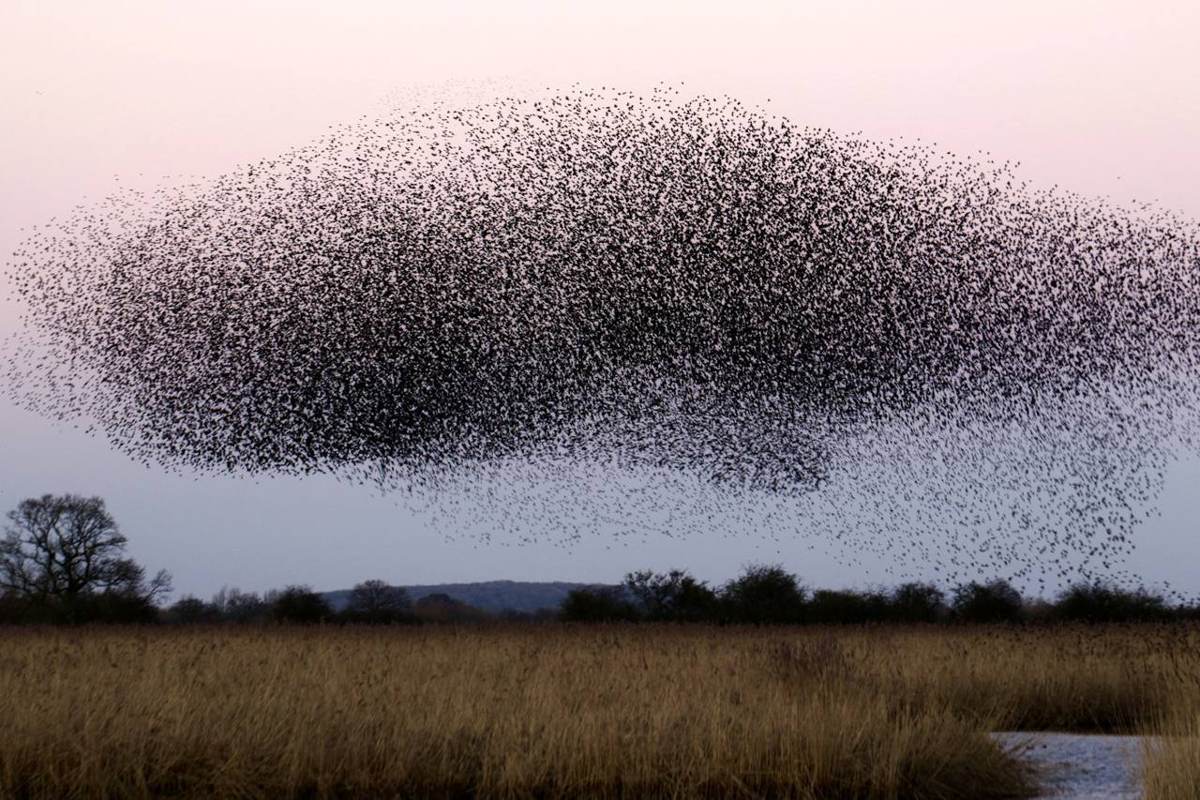
Great frigatebirds can stay over the open ocean for weeks, unable to land on the water. In 2016, scientists fitted them with tiny brain recorders and found that on flights of up to ten days they slept in bursts of a few seconds, often with one half of the brain at a time, keeping one eye open in the direction they were flying. In total they slept only about 42 minutes a day, against more than twelve hours on land (Rattenborg and others, Nature Communications, 2016). Even the most watchful bird has to snatch sleep, and pays for it later.
Episode 3
At our best
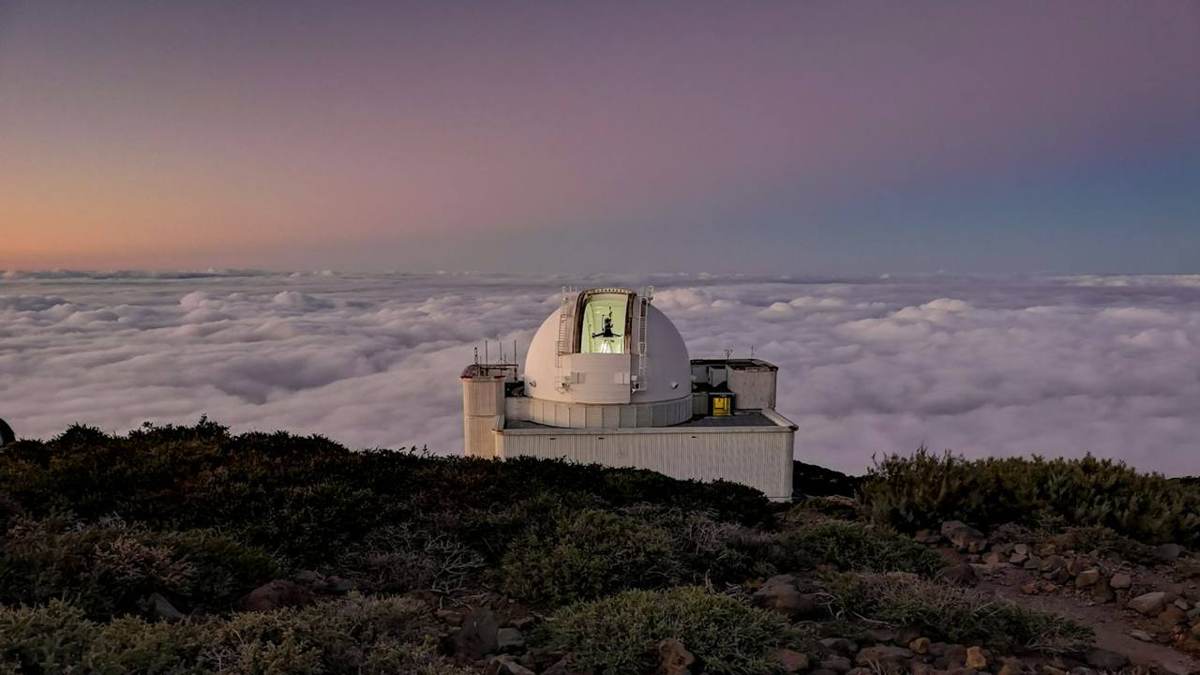
NASA's Deep Space Network never closes. It has giant dish antennas at three sites, in California, near Madrid and near Canberra, placed roughly a third of the way around the world from each other. As the Earth turns, at least one of them can always face each spacecraft, from the Moon to Voyager beyond the planets (NASA). It is one of humanity's great unbroken watches. But it needs three continents, hundreds of staff, constant power and repairs, and it can only follow the few dozen machines we have launched.
Episode 4
The Break
Take away the shift change, the wandering attention, the half-brain sleep, the three continents and the turning of the Earth. Every watcher we know watches only part of the time and only part of the world. al-Muhaymin is not a better watchman; He is watching with no shift and no blind side. “Neither drowsiness overtakes Him nor sleep. To Him belongs whatever is in the heavens and whatever is on earth” (Qur'an 2:255, our rendering).
Read: Q 59:23 (al-Muhaymin); the same word describes the Qur'an as 'a criterion over' earlier scripture (5:48)
From the tradition: Muslim 179a: 'God does not sleep, and it does not befit Him to sleep'. Psalm 121:4 'neither slumbers nor sleeps'
On screen
Juvenal asked who guards the guards. al-Muhaymin is the answer that needs no guard.
NASA Deep Space Network, three sites around the globe
In nature
Library gap: no frigatebird film in; Max Planck Society release (2016) has footage
In people
Hospital night staff; coastguard watch
In science
Neuroscience: unihemispheric sleep in birds and dolphins
Living it
Watch over what you are trusted with
Its kind
Act: something done: mercy shown, provision given, a prayer answered.
In the Qur'an: 59:23 (also used of the Qur'an, 5:48)
Two in a cave
In the year 622, the Prophet Muhammad (peace be upon him) left Mecca in secret with his closest friend, Abū Bakr. Their enemies had put a price on their heads, and search parties fanned out across the desert. The two men hid in a small cave on Mount Thawr, south of the city, for three nights.
At one point the searchers came right up to the mouth of the cave. Abū Bakr could see their feet. He whispered: “Messenger of God, if one of them looks down at his feet, he will see us.”
The Prophet replied: “What do you think, Abū Bakr, of two when God is the third of them?” (Bukhari 3653).
The Qur'an remembers the moment: “when he said to his companion, ‘Do not grieve; God is with us’, and God sent down His calm upon him” (9:40). The searchers turned away. Later tradition added the image of a spider's web and a dove's nest across the entrance, though the strongest reports do not mention them.
The point of the story is not that danger disappeared. The danger was a few feet away. It is that someone was watching over the two of them who does not look away.
What each faith says
Judaism
“The eyes of the LORD are in every place, keeping watch upon the evil and the good.”
The Hebrew Bible pictures God as the guardian who never sleeps, and as the One whose attention reaches every place. Jewish evening prayers include Hashkiveinu, “Cause us to lie down in peace… and guard our going out and our coming in.”
Before sleep, many Jews say the bedtime Shema, placing the night in God's keeping. The book of Proverbs puts the idea simply.
Christianity
“Aren't two sparrows sold for an assarion coin? Not one of them falls on the ground apart from your Father's will, but the very hairs of your head are all numbered.”
Jesus (peace be upon him) told his followers that God's care reaches the smallest things: not one sparrow falls without the Father, and every hair is counted. Christians read this as God's attentive providence over each life.
Many Christians pray Compline at night, asking God to watch over them while they sleep, and the Psalms of watchfulness are part of that prayer.
Islam
“He is God, other than whom there is no god: the King, the Holy, Peace, the Giver of Safety, the Watchful Guardian, the Almighty, the Compeller, the Supremely Great.”
al-Muhaymin appears once as a Name of God, in Qur'an 59:23. Its meaning is the One who watches over, protects and has authority over all things. Scholars discuss its root: some trace it to h-y-m-n, ‘to watch over’; others to ʾ-m-n, the root of safety and trust.
The same word is used of the Qur'an itself, which is called “a confirmer and a guardian” of earlier scripture (5:48). Muslims understand this as the Qur'an confirming and safeguarding the truth those books brought; Jews and Christians, of course, read their own scriptures on their own terms. The Prophet said: “God does not sleep, and it is not fitting for Him to sleep” (Muslim 179).
Same and different
Jews, Christians and Muslims all pray to a God who does not sleep and whose care reaches every place, and all three put the night into His keeping before they sleep. They differ on how that watching relates to scripture: Muslims see the Qur'an as a guardian over earlier books, while Jews and Christians hold their own scriptures as complete in themselves. On the heart of this Name, that we are watched over by One who never looks away, they stand very close.
A moment to reflect
When did you last feel that someone was watching out for you?
Does the idea of being watched all the time feel comforting, uncomfortable, or both? Why?
What have you been trusted to watch over, and how well do you keep that watch?
Watch
Watch on YouTube ↗ · plays here on the live site; YouTube without tracking until you press play
NASA on how the Deep Space Network keeps in touch with faraway spacecraft: the ‘At our best’ rung.
Watch on YouTube ↗ · plays here on the live site; YouTube without tracking until you press play
A clear explainer on why the Deep Space Network never stops listening.
Watch on YouTube ↗ · plays here on the live site; YouTube without tracking until you press play
How dolphins sleep with half a brain at a time, like the frigatebird in the ‘In nature’ rung.
Do it together
schoolsThe clock test
Recreate Mackworth's experiment: one pupil taps a desk at a steady beat and, every so often, taps twice. Others raise a hand at each double tap. Count the misses in the first five minutes and the last five. Then talk about why we need shifts, and what never needing one would mean.
neighbours / faith groupsNight-watch thank you
Write cards for people who keep watch while others sleep: night nurses, carers, security staff, coastguard volunteers. Deliver them to a local hospital or station.
 Episode 1